· 3 min read
Japan in cherry-blossom season: what to pack for Tokyo and Kyoto
Cool mornings, warm afternoons, temples where your shoes come off and 20,000 steps a day. A story from cherry-blossom season, and the list that goes with it.
TYO · KYO
- When
- Late March–early April
- Weather
- 7–19 °C, some rain
- Pack
- Layers, slip-on shoes
The story
At seven in the morning, Ueno Park is already full of blue tarps. Office workers have been sent early to hold spots under the best trees for the evening’s picnic, and they sit on them in suits, reading on their phones. The cherry blossoms are at their peak, pale pink against a sky that can’t decide between sun and cloud. It’s 8 °C, and you’re glad of the thin down jacket you almost didn’t pack.
By two in the afternoon it’s 18 °C and the jacket is folded in your bag. You’ve walked 14,000 steps and you’re only halfway through the day. The shoes you broke in before the trip are the best decision you made.
The next day, in Kyoto, you visit a temple where you leave your shoes at the entrance and walk on polished wooden floors in your socks. It’s the third time today you’ve taken your shoes off, and you have a new respect for slip-on shoes. You also notice, a little too late, that one of your socks has a hole in it. Nobody says anything, but you notice.
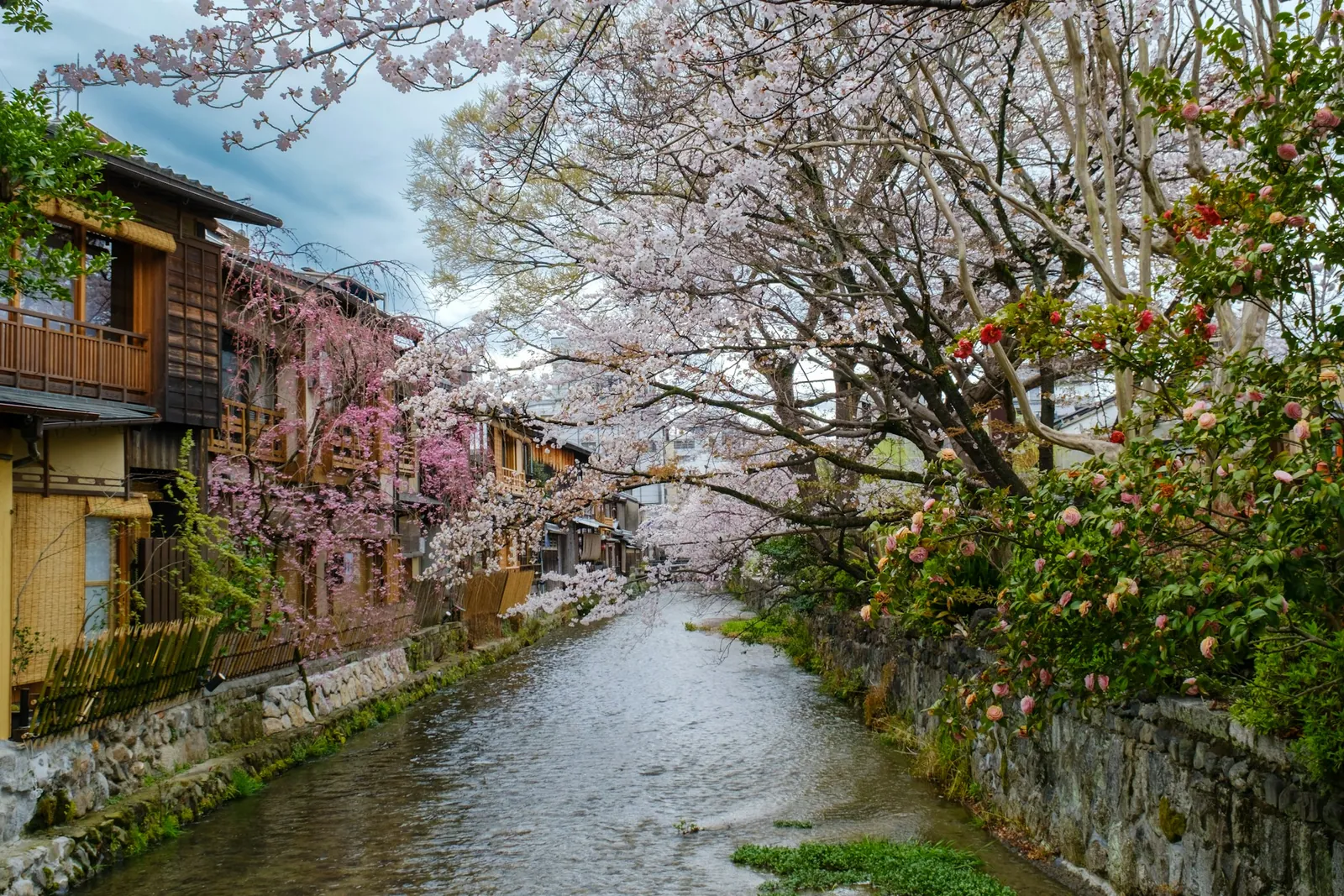
That evening you go back to the river for yozakura, cherry blossoms under lanterns. The temperature has dropped to 9 °C, and the jacket comes out again. Afterwards, you carry an empty drink can for twenty minutes, because Japan has almost no public bins and everyone takes their trash home.
Spring in Japan asks for three things: layers for a day that goes from cold to warm and back, shoes that come off easily, and a small bag for your own trash.
What to pack
Pack light: you’ll walk a lot, and hotel rooms are small.
Clothes
- A thin down jacket or a warm fleece, for mornings and evenings.
- A light waterproof jacket. Spring showers are common.
- Long-sleeved tops and a couple of T-shirts to layer.
- Comfortable trousers or a skirt; nothing that makes sitting on the floor awkward.
- Socks without holes. You’ll show them off at temples, traditional restaurants and inns.
Shoes
- Broken-in walking shoes that slip on and off easily. 20,000 steps a day is normal.
- Many people bring a second pair in case the first gets wet.
For the activities
- A small tarp or picnic mat if you want to join the hanami picnics.
- A small bag for your trash.
- A towel and a change of clothes if you’re visiting an onsen (hot spring). Some still don’t admit people with visible tattoos; check first.
- Antihistamines if you’re allergic to pollen: cedar pollen season overlaps with the blossoms.
Documents, money and tech
- Passport. Hotels must see it at check-in.
- A coin purse. Japan uses more cash and coins than most countries, especially in small restaurants and temples.
- A transport card (Suica or PASMO), which can live in your phone’s wallet.
- A plug adapter if needed, and a power bank.
- An eSIM or pocket Wi-Fi for maps and translation.
Good to know
- Weather: late March and early April run from about 7 °C in the morning to 19 °C in the afternoon (45 to 66 °F). The blossoms peak for about a week, at dates that change each year; forecasts are published from February.
- Plugs: types A and B, 100 V. North American plugs fit (two-pin ones; three-pin may not). Most phone and laptop chargers handle 100 V; hair dryers and straighteners from 220–240 V countries often don’t.
- Luggage: big suitcases need a reserved seat with luggage space on the Tokyo–Kyoto shinkansen. Hotels can forward your bags to your next stop for a small fee.
- Money: Japanese yen (JPY). Cards work in cities, but carry cash.
- Entry: many nationalities can visit visa-free for short stays; check yours. Registering on the government’s Visit Japan Web before you fly speeds up immigration and customs.