· 7 min read
What to pack for India in January: Delhi, Agra, Jaipur
Foggy 8 °C mornings, 20 °C afternoons, shoes off at the mosque. What to pack for India in January, from Delhi to the Taj Mahal and Jaipur.
DEL · AGR · JAI
Delhi, Agra and Jaipur · India
- When
- January
- Weather
- 8–23 °C, foggy mornings, dry
- Pack
- Layers, a warm jacket, temple clothes, slip-ons
Some links in this post pay Wayboard a commission. Your price is the same.
In January, northern India is cool and dry: Delhi runs from about 8 to 20 °C (46 to 68 °F) and Jaipur from 8 to 23 °C (47 to 73 °F), with fog on many mornings and almost no rain. Pack layers, a warm jacket for the early starts, clothes that cover shoulders and knees, and shoes that slip off.
The story
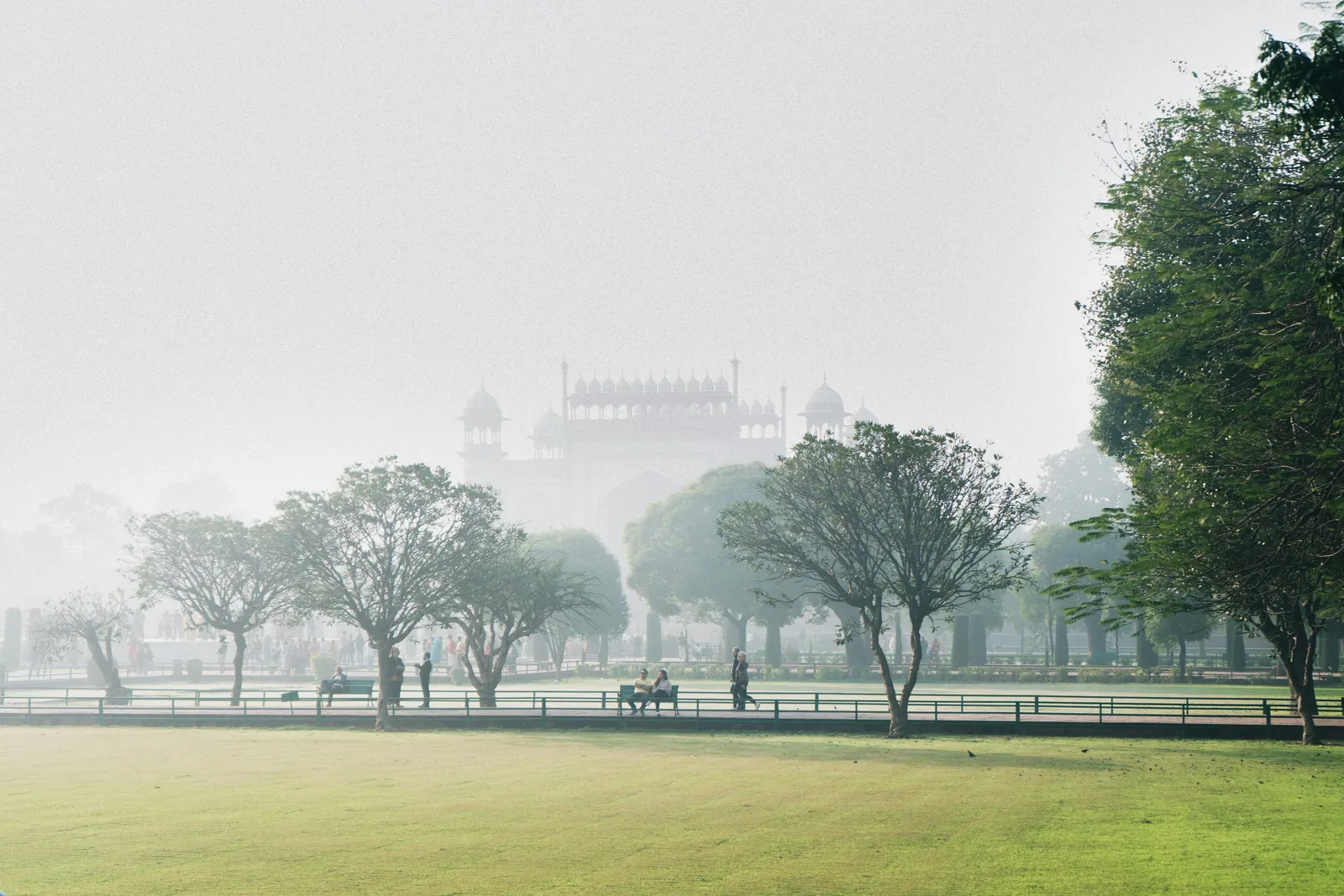
Your flight lands in Delhi late at night, and the air outside the terminal is cold and smells of woodsmoke. You expected India to be hot. At six the next morning it’s 8 °C, and the city is wrapped in a grey fog that makes the street lights glow. Your driver, booked ahead, is wearing a wool hat and a scarf.
By noon the fog has burned off and it’s 20 °C, sweater weather turning into T-shirt weather. In Old Delhi you climb the steps of the Jama Masjid, leave your shoes at the top, and walk barefoot across the courtyard; the stone is cold. At the Sikh temple of Gurdwara Bangla Sahib you cover your head with a scarf and leave your shoes again. You’re wearing long trousers and a shirt that covers your shoulders, so nobody stops you. Slip-on shoes, you realize, are the best thing in your bag.
The train to Agra leaves early, or is meant to. On foggy January mornings the trains of northern India often run late, and yours waits on the platform, then crawls through a white field. You have a book, a snack, a bottle of water and a fleece. You arrive late, and nobody around you is surprised.
You go to the Taj Mahal the next morning, at opening time, half an hour before sunrise (it’s closed on Fridays). At the gate the guards check every bag: no food, no headphones, no phone charger, no tripod. You left the power bank at the hotel, and your bag is small, so security is quick. The fog hides the dome at first. You wait in your jacket with a cup of tea, and by nine the white marble appears, one minaret at a time. Inside the mausoleum you wear the shoe covers that came with your ticket.
Jaipur, a long day later by road, is the warmest stop. The afternoons reach 22 °C, the sun is strong on the ramparts of Amber Fort, and you’re glad of sunglasses and a hat. After sunset it drops fast. On a rooftop facing the Hawa Mahal, dinner is served next to an outdoor heater, and you’re wearing everything you brought.
India’s Golden Triangle in January means cold, foggy mornings, mild sunny afternoons and cold evenings, with almost no rain. Pack layers you can take off by noon, a warm jacket, modest clothes for temples and mosques, and patience for fog delays.
What to pack for India in January
Layers for a day that starts near 8 °C and ends near 20 °C, plus what the temples and the Taj ask for.
Clothes
- Long trousers or long, loose skirts, light enough for the afternoons: they cover your knees at every temple and mosque.
- T-shirts and shirts that cover your shoulders, for the daytime.
- A warm sweater or fleece, and a warm jacket for the early mornings, the trains and the evenings: it’s often under 10 °C before sunrise.
- A large scarf or shawl: it covers your head at a gurdwara, your shoulders at a mosque, and keeps you warm at night.
- A wool hat and light gloves if you’ll be out at dawn for the Taj Mahal.
- Warm layers to sleep in: many older hotels and guesthouses have little heating.
Shoes
- Comfortable shoes that slip on and off without laces: you take them off at every temple, mosque and gurdwara.
- Thick socks, for the cold stone floors and courtyards where you walk without shoes.
- A pair of sandals or flip-flops for the hotel.
For the day
- A small daypack: big bags slow down security at the Taj Mahal.
- Sunglasses, a hat and sunscreen: the afternoon sun is strong at Amber Fort.
- A refillable water bottle.
- Wet wipes and hand sanitizer for street food and long journeys.
- A book or downloaded shows and some snacks for fog delays on trains and flights.
Documents, money and tech
- Your passport, valid for at least six months when you apply for the e-Visa, with two blank pages (see Good to know).
- A printed copy of your e-Visa approval (the ETA).
- Some cash in rupees for small shops, tips and shoe stands at temples; cards work in hotels and larger restaurants.
- A plug adapter for types C, D or M; India uses 230 V.
- An eSIM for India, for maps and ride apps from the airport.
- A power bank for long train days, left at the hotel on Taj Mahal day.
For health
- Your usual medicines in their original packaging, and something for an upset stomach.
- Ask a travel clinic which vaccines and medicines you need, well before you leave.
Good to know
- Weather: January is the coldest month in Delhi and Jaipur, and one of the driest. By the India Meteorological Department’s 1991–2020 normals for New Delhi (Safdarjung) and Jaipur:
| Stop | High | Low | Rain in January | Days with fog | What changes in the bag |
|---|---|---|---|---|---|
| Delhi | 20.1 °C (68 °F) | 7.5 °C (46 °F) | 19 mm (0.8 in), about 2 days | about 22 | A warm jacket, a book for delays |
| Jaipur | 22.5 °C (73 °F) | 8.4 °C (47 °F) | 6 mm (0.2 in), about 1 day | about 3 | Sunglasses and a hat for the forts |
- January or February: February in Delhi is milder, from 10.6 to 24.2 °C (51 to 76 °F), and fog days drop to about 11, by the same normals.
- Fog and trains: dense fog is most common in the mornings in December and January, and it delays trains and sometimes flights. Keep a buffer before an onward international flight, and don’t plan tight connections.
- Temples, mosques and gurdwaras: cover shoulders and knees, take your shoes off where you’re asked, and cover your head at a gurdwara. Many places have a stand that keeps shoes for a small tip.
- The Taj Mahal: it’s closed on Fridays and opens half an hour before sunrise. The official visitor rules allow a water bottle and a camera, but not food, tobacco, headphones, phone chargers, other electric goods, tripods or drones, and no photos inside the mausoleum. A half-liter water bottle and shoe covers come with the foreign visitor’s ticket. Check the rules before you go.
- Air: in winter, Delhi’s air is often hazy and polluted. If you have asthma or a heart or lung condition, ask your doctor or a travel clinic before you go.
- Plugs: types C, D and M, 230 V and 50 Hz. Most phone and laptop chargers handle it; check hair dryers.
- Money: Indian rupee (INR).
- Entry: most visitors need a visa. Many nationalities can apply for an e-Visa on the official Indian e-Visa site at least four days before arrival; you print the approval and show it at immigration in Delhi or Jaipur. The same site lets foreign visitors fill in the e-Arrival card online in the 72 hours before landing. Check whether your passport is eligible, and use only the official site (checked November 1, 2026).
- Health: ask a travel clinic about vaccines and medicines for India, and read the CDC’s page for travelers to India.
- More of Asia: going on to Bangkok? What to pack for Thailand in December covers the dry season there.
Questions
Is it cold in India in January?
Yes, in the north: Delhi runs from about 8 to 20 °C (46 to 68 °F) and Jaipur from 8 to 23 °C (47 to 73 °F). The mornings and evenings are cold, the afternoons mild, so pack layers and a warm jacket.
What should I wear to the Taj Mahal?
Clothes that cover your shoulders and knees, a warm layer for an early visit, and shoes that are easy to walk in; shoe covers for the mausoleum come with the foreign visitor’s ticket. In January the morning can be foggy and close to 8 °C.
What can’t you bring into the Taj Mahal?
Food, tobacco, headphones, phone chargers, other electric goods except a camera, tripods, knives and drones. A water bottle is allowed, and a small bag gets through security faster.
Is the Taj Mahal open on Friday?
No: it’s closed to visitors on Fridays. On other days it opens half an hour before sunrise and closes half an hour before sunset.
Do I need a visa for India?
Most visitors do. Many nationalities can apply for an e-Visa online at least four days before arrival, on the official Indian e-Visa site; check whether your passport is eligible.
Book for this trip
- Places to stay Booking.com (opens in a new tab)
- Airport transfers Welcome Pickups (opens in a new tab)
- Tickets and tours Tiqets (opens in a new tab)
- eSIM data Airalo (opens in a new tab)
- Travel insurance SafetyWing (opens in a new tab)
Wayboard may earn a commission if you buy through these links. Your price is the same.