· 6 min read
What to pack for Venice in November: high water and fog
Damp cold near 6 °C, fog on the lagoon and the sirens of high water. What to pack for Venice in November, from tall boots to a bag you can carry.
VCE
Venice · Italy
- When
- November
- Weather
- 6–13 °C, fog, high water
- Pack
- Waterproof boots, warm layers, a light bag
Some links in this post pay Wayboard a commission. Your price is the same.
In November, Venice runs from about 6 to 13 °C (43 to 55 °F), with rain on about seven days, fog on many mornings, and the season of high water, the acqua alta. Pack a warm waterproof jacket, layers, tall waterproof boots or over-boots, gloves for the boat rides, and a bag light enough to carry over bridges.
The story
Venice in November, and the first thing you do is carry your bag. From the station, the hotel is twenty minutes on foot and four bridges away, each with steps up and steps down. The wheels don’t help on the steps; a light bag, or a backpack, does.
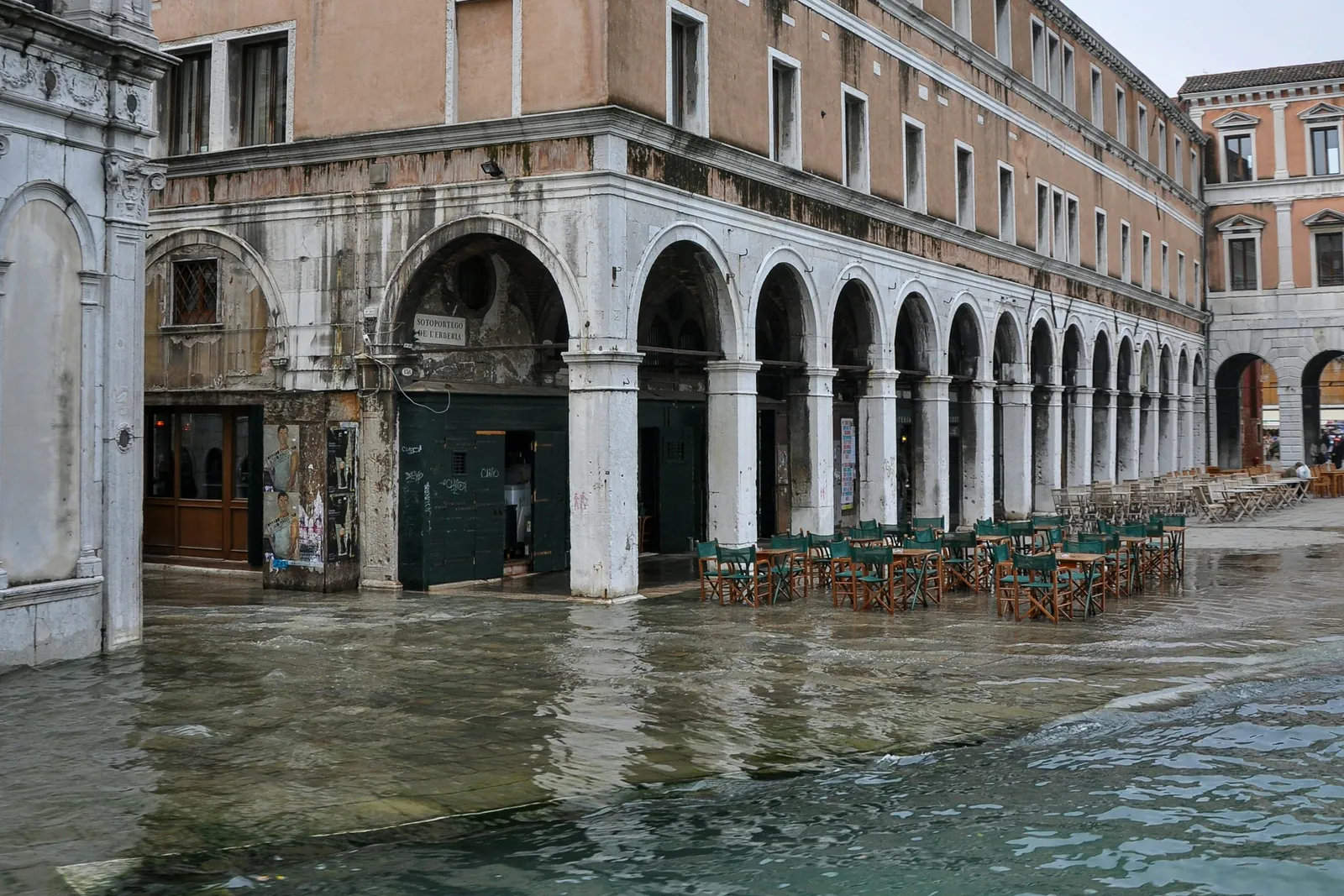
The next morning, a siren sounds across the city at seven: two notes, rising. That means a tide of about 120 cm. The water comes up through the drains in St. Mark’s Square, quietly, and the city sets out raised walkways along the main routes. Your boots come up to mid-calf and they’re waterproof, so you walk through the shallow parts and wait on the walkway where it’s deeper. By late morning, the tide goes out and the stone is just wet.
The fog doesn’t lift until noon. The bell tower across the basin disappears, then the boats. It’s 8 °C, and the damp gets into everything: the sweater under your jacket is what keeps you warm, not the jacket.
You take the vaporetto, the water bus, up the Grand Canal. Outside on the deck, the wind off the water is colder than the streets, and you’re glad of gloves and a scarf. Inside, the windows steam up. In the afternoon, you queue a few minutes for the Doge’s Palace, where it’s dry and much quieter than in summer.
The sun sets before five. Dinner is in a small place near the Rialto, and the walk back is through narrow streets with the fog back down, the canals black and still. Your shoes are dry, which matters more than anything else you packed.
Venice in November is cool, damp, and often foggy, with rain on some days and high water on a few. Pack a waterproof jacket and warm layers, tall waterproof boots or over-boots, gloves for the boats, and a bag you can carry over bridges.
What to pack for Venice in November
Pack for damp cold, water underfoot on some mornings, and a lot of walking with your bag.
Clothes
- A warm, waterproof jacket with a hood: rain and fog are common, and the damp feels colder than the number.
- A sweater or fleece that does the warming under the jacket.
- Long-sleeved tops and a thermal layer for the boat rides and the evenings.
- A scarf, a hat, and gloves: the wind on the vaporetto deck is the coldest part of the day.
Shoes
- Waterproof boots that come up the calf, or rubber over-boots that pull over your shoes: high water reaches the lowest streets and squares for a few hours at a time.
- Walking shoes with grip for the wet stone and the bridge steps.
- Wool socks, and a spare pair in your day bag.
Luggage
- A light suitcase, a backpack, or a bag you can lift: there are no cars in the historic center, and nearly every bridge has steps.
- A packing cube or dry bag to keep clothes dry if your bag sits on a wet pier or walkway.
For the day
- A compact umbrella, if you prefer one to a hood.
- A small bag that closes, worn in front on the vaporetto and in crowds.
- A vaporetto pass for the days you’ll take the water bus more than twice.
Documents, money and tech
- Passport, or a national ID card if you’re an EU, EEA or Swiss citizen.
- Your timed tickets for the Doge’s Palace and other sights, on your phone.
- An eSIM for Italy, for maps in the maze of streets and the tide forecast.
- A plug adapter if you come from outside continental Europe: sockets are types C, F and L, at 230 V.
- A power bank: maps drain the battery, and the cold drains it faster.
Good to know
- Weather: November runs from about 6 to 13 °C (43 to 55 °F), with about 80 mm of rain over about seven days, by the 1991–2020 normals of ISPRA, Italy’s environmental institute, for the Aeronautica Militare station at Venezia Tessera, by the airport. Fog is common on the lagoon, and the sun sets before 5 pm.
- High water (acqua alta): in autumn and winter, the highest tides flood the lowest parts of the city, such as St. Mark’s Square, for a few hours around high tide, then go out. Sirens warn ahead: one long note for 110 cm, then two, three, or four rising notes for 120, 130, and 140 cm or more. Raised walkways go up along the main routes, and shops sell plastic over-boots on high-water days.
- The MOSE barrier: mobile gates at the lagoon’s inlets are raised when a tide above an agreed level is forecast; by March 2025 they had been raised 100 times. Lower tides can still wet the lowest spots.
- Access fee: the day-trip fee for the historic center ran on set dates from April to July 2026 and doesn’t apply after July 27, 2026, so there’s none in November. Check the city’s access fee site for later years (checked October 6, 2026).
- Getting around: on foot, or by vaporetto. Buy your ticket before you board and tap it on the reader at the pier. A big suitcase on a crowded boat is hard work; check ACTV’s luggage rules if you carry more than one.
- The Biennale: the Biennale Arte runs until November 22, 2026.
- Plugs: types C, F and L, 230 V.
- Money: euro (EUR). Hotels add a city tax per night.
- Entry: Italy is in the Schengen area. If you’re not an EU, EEA or Swiss citizen, check whether you need a visa or a travel authorization before you go, and expect the EU’s biometric border check on your first entry (checked October 6, 2026).
- Going on to Rome? Here’s what to pack for Rome in November: milder, and wetter.
Questions
Does Venice flood in November?
Sometimes: November is in the high-water season, when the highest tides flood the lowest parts of the city, such as St. Mark’s Square, for a few hours. Sirens warn ahead, raised walkways go up on the main routes, and the MOSE barrier is raised for the highest tides.
How cold is Venice in November?
Cool and damp: about 6 to 13 °C (43 to 55 °F). Fog is common, and the wind on the vaporetto feels colder, so pack a warm waterproof jacket, a sweater, gloves, and a scarf.
What shoes should I wear in Venice in November?
Waterproof boots that come up the calf, or rubber over-boots you can pull over walking shoes. High water covers the lowest streets on some mornings, and the stone and the bridge steps are often wet, so wear soles with grip.
Do I have to pay the Venice access fee in November?
No: the day-trip fee ran on set dates from April to July 2026 and doesn’t apply after July 27, 2026. Check the city’s access fee site for later years.
Do I need a passport for Venice?
Yes, or a national ID card if you’re an EU, EEA or Swiss citizen. Italy is in the Schengen area: if you’re not an EU, EEA or Swiss citizen, check whether you need a visa or a travel authorization before you go, and expect the EU’s biometric border check on your first entry.
Book for this trip
- Places to stay Booking.com (opens in a new tab)
- Airport transfers Welcome Pickups (opens in a new tab)
- Tickets and tours Tiqets (opens in a new tab)
- eSIM data Airalo (opens in a new tab)
- Travel insurance SafetyWing (opens in a new tab)
Wayboard may earn a commission if you buy through these links. Your price is the same.