· 6 min read
What to pack when flying with a 6-month-old baby
Milk through security, a bassinet over the ocean, a diaper change at 3 a.m. What to pack when flying with a baby, and the rules to check before you go.
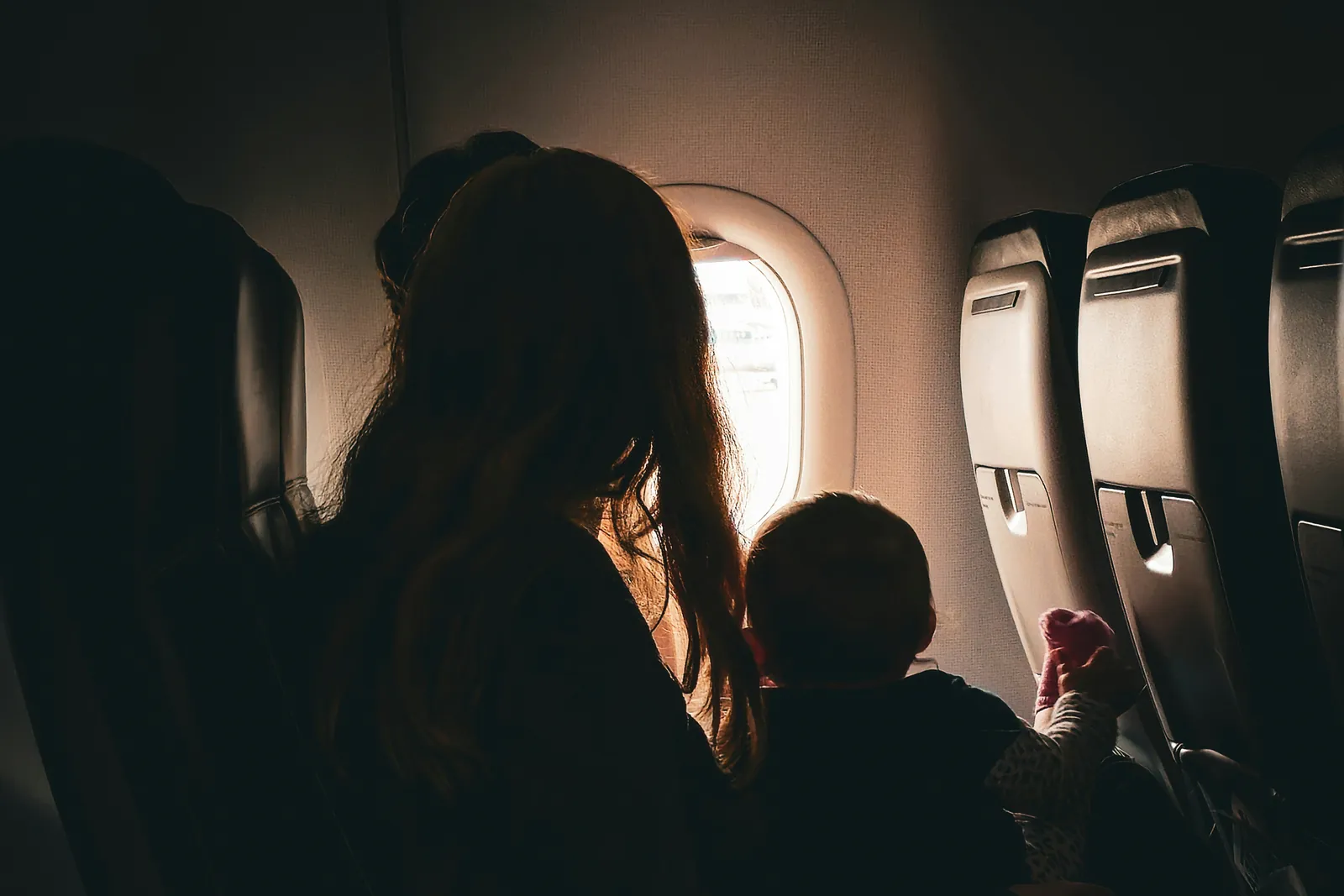
BABY
Flying with a baby
- When
- Any time of year
- Pack
- Diapers, milk, a sleep sack, the baby's passport
When you fly with a baby, most of the packing goes in the cabin bag: a diaper for every hour of travel plus spares, wipes, a changing pad, two changes of clothes (and a top for you), milk and baby food, which may go through security over 100 ml, a sleep sack, a carrier, and the baby’s own passport.
The story
It’s a night flight across the ocean, your baby’s first, and she is six months old. At check-in, the agent opens three passports, one with a photo of a very small face, checks her age for the lap ticket, and confirms the bassinet you asked for when you booked. The stroller stays with you, tagged for the aircraft door.
At security, you lift out the bottles of milk and the pouches of puree and tell the officer. They’re over 100 ml, and they’re allowed: he tests one bottle and hands everything back. The stroller goes through the X-ray folded, and you walk through the metal detector with the baby in your arms.
Families with small children board first, and the crew takes the stroller at the aircraft door. For take-off she’s on your lap with a bottle, swallowing through the change in pressure. Then the crew clips a bassinet to the wall in front of your row, and she sleeps in the sleep sack she wears at home. Twice the seat-belt sign comes on, and each time you lift her out and hold her until it goes off.
At three in the morning comes the diaper that reaches her back. The crew points you to the lavatory with a fold-down changing table, and everything is in one pouch: diapers, wipes, a bag for the dirty clothes, a clean bodysuit. Her sleepsuit is done for, and so is your T-shirt; both have spares in the cabin bag.
For the landing, the pacifier. The stroller is waiting at the aircraft door, and at passport control the officer looks from the baby’s photo to the baby, twice.
Flying with a baby comes down to the cabin bag: milk and food for the whole trip and a few hours more, a change of clothes for both of you, somewhere to sleep, and a passport of her own. Pack her things first, and keep them within reach.
What to pack when flying with a baby
The baby’s list is longer than yours, and most of it rides in the cabin: pack it first, as a list of its own.
The diaper bag, in the cabin
- Diapers: about one for every hour of travel, plus a few for delays.
- Wipes, a changing pad, and bags for dirty diapers: a plane’s changing table is small and bare.
- Two changes of clothes for the baby, a muslin cloth for spit-up, and a spare top for you.
- Diaper cream and hand sanitizer in containers of 100 ml or less, so they pass the liquids rules anywhere.
- Any medicine your pediatrician suggests, in the cabin bag.
Feeding
- Milk, formula, and baby food for the trip and a few hours more: they may go through security over 100 ml.
- Formula powder in a dispenser, one feed per section: nothing to scoop on a tray table.
- Two or three bottles, or one and a small brush to wash it.
- Pouches of puree and a spoon, if the baby eats solids: nothing to heat.
- A bottle, the breast, or a pacifier for take-off and landing, when the change in pressure can bother small ears.
- Snacks for you: the meal cart comes just when the baby wants to eat.
Sleep
- A sleep sack the baby already sleeps in: familiar in the bassinet and in the hotel crib.
- A carrier or sling: free hands at security, and naps in the aisle. The baby comes out of it for take-off and landing.
- A light stroller that folds: a bed at the gate, and many airlines take it at the aircraft door.
- A favorite toy, for the hour she won’t sleep.
Clothes
- Footed sleepsuits that zip: quick changes in a small lavatory.
- A bodysuit under and a cardigan over: cabins swing between warm and cool.
- One outfit for the weather where you land, in the cabin bag: the suitcase can be slow.
Documents
- The baby’s own passport, or ID card where one is accepted: apply for it weeks before you fly.
- The baby’s ticket, and proof of age: airlines can ask for it for a lap baby.
- A letter or authorization from the other parent, if only one of you flies (see Good to know).
- Travel insurance that covers the baby, and the pediatrician’s number.
Good to know
- At security: baby milk, formula, and baby food may go in the cabin in containers over 100 ml (3.4 oz), in the amount the trip needs. Take them out and tell the officer, who may test or open them. See the rules of the TSA in the US, the EU, and GOV.UK in the UK, where formula and baby food need the baby with you (checked September 30, 2026).
- The baby’s ticket: under 2, a baby can usually fly on an adult’s lap, one per adult, for much less than a seat. A seat of its own lets the baby ride in a car seat approved for aircraft, which the FAA recommends on US planes (checked September 30, 2026). Ask the airline the price, the youngest age it flies, and the proof of age it wants.
- Bassinet and stroller: long flights have a few bassinets, at the rows with a wall in front: ask for one when you book, and ask its weight and length limits. Many airlines take a stroller or a car seat at the aircraft door or the counter, often at no charge; ask about size limits, and whether the stroller comes back at the door or at baggage claim.
- Documents: every baby needs its own passport, or its own ID card where one is accepted. With only one parent, a child may need a document signed by the other: for the US, a letter of consent (USAGov); in the EU, each country decides (Your Europe). Brazil asks for a travel authorization whenever a Brazilian child leaves the country with only one parent, with someone else, or alone (Federal Police, in Portuguese) (checked September 30, 2026).
- Health: ask your pediatrician whether the baby is ready to fly, especially in the first weeks or with a cold or an ear infection.
- Where you land: for the weather at the other end, see what to pack for Portugal in spring or for Mexico City and Cancún.
Questions
Can you bring baby formula on a plane?
Yes: formula, breast milk, and baby food can go in your cabin bag in containers over 100 ml (3.4 oz), in the amount the trip needs. Tell the officer at security; in the UK, formula and baby food need the baby with you.
Does a baby need a passport to fly?
Yes, to fly abroad: every baby needs its own passport, or its own ID card where one is accepted. If only one parent flies with the baby, the other may need to sign a letter or an authorization; Brazil asks for one for Brazilian children.
Do babies need their own seat on a plane?
No: under 2, a baby can usually fly on an adult’s lap, one per adult. A seat of its own lets the baby ride in a car seat approved for aircraft, which the FAA recommends on US planes.
Can you take a stroller on a plane?
Usually as far as the aircraft door: many airlines take it there, often at no charge, and give it back at the door or at baggage claim. Ask about size limits when you book.
How do I get a bassinet on a plane?
Ask the airline when you book: long flights have a few bassinets, at the rows with a wall in front, and each airline sets a weight and length limit. The baby comes out whenever the seat-belt sign is on.