· 6 min read
Bariloche and Ushuaia packing list: December to March
Sunny 23 °C afternoons by Bariloche's lakes, then wind, drizzle, and 17 hours of daylight in Ushuaia. A Bariloche and Ushuaia packing list for summer.
BRC · USH
Bariloche and Ushuaia · Argentina
- When
- December–March
- Weather
- 5–23 °C, wind, rain in Ushuaia
- Pack
- Wind shell, fleece, sunscreen, boots
Some links in this post pay Wayboard a commission. Your price is the same.
From December to March, Bariloche runs from about 5 to 23 °C (41 to 73 °F), with dry, sunny days and cold nights. Ushuaia is cooler, with highs of 12 to 14 °C (54 to 57 °F), strong wind, and frequent light rain. Pack layers, a windproof rain jacket, a warm hat and gloves, sunscreen, and waterproof hiking shoes.
The story
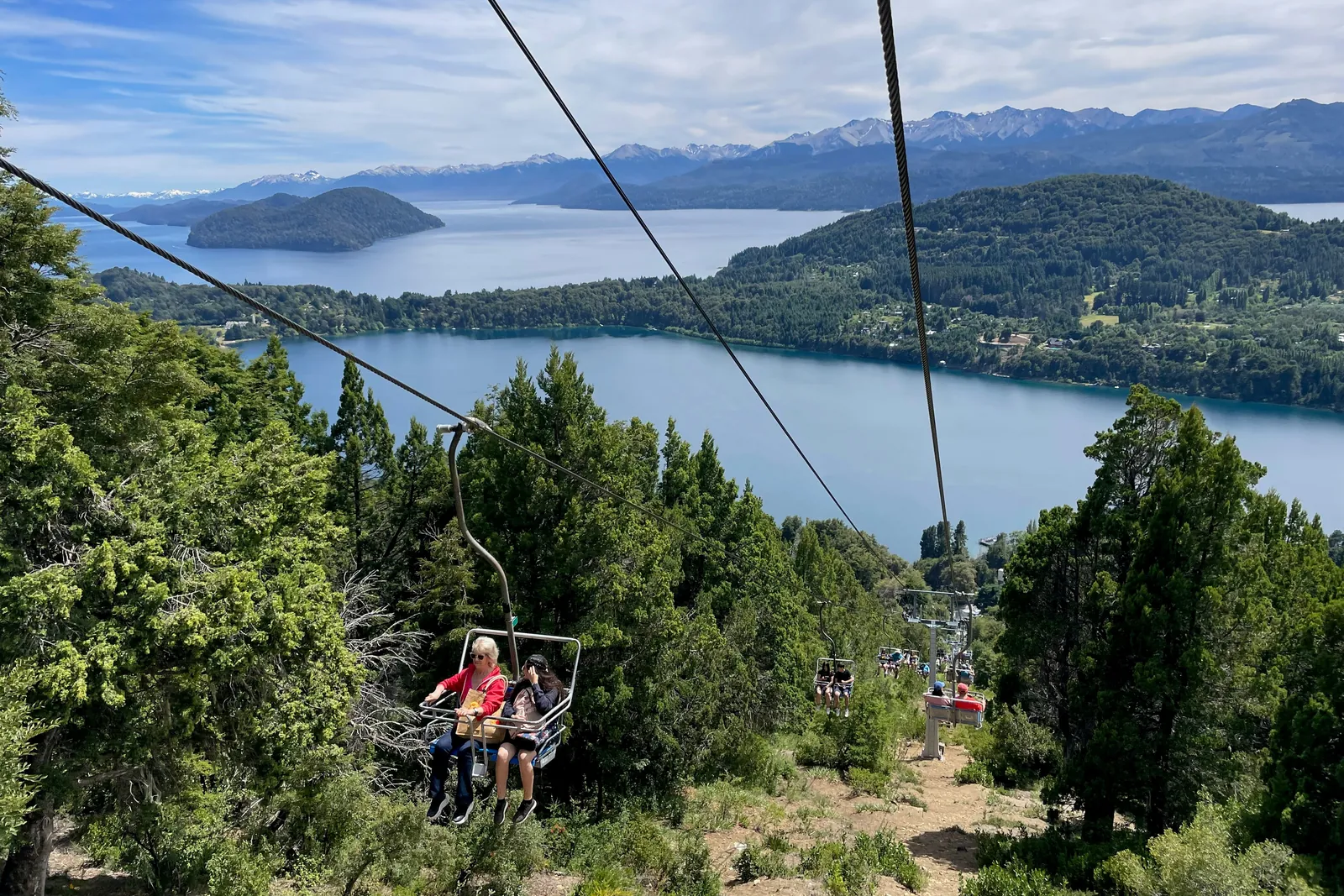
It’s early January in Bariloche, and at eight in the morning it’s 8 °C. You walk to breakfast in a fleece, past chocolate shops that haven’t opened yet, and the peaks across the lake still have snow on them. By three it’s 24 °C under a clear sky, and you ride a chairlift up through the trees in a T-shirt, glad of the hat, the sunglasses, and the sunscreen.
Down at a beach on the lake, the water is cold enough to keep a swim short. By five the wind is up and the fleece comes back out. Near the trees, horseflies, the tábanos of December and January, circle anything dark; your light-colored shirt works better than the repellent. The sun sets after nine.
Then you fly south to Ushuaia, and the trip changes season. At midday it’s 10 °C under a gray sky, and a fine rain comes and goes. On the boat on the Beagle Channel, the wind on deck calls for the beanie and gloves you almost left at home. Sea lions doze on the rocks, and a red-and-white lighthouse stands on its island.
The next morning, in Tierra del Fuego National Park, the path along the shore is muddy from the night’s rain, and your waterproof boots earn their place. At ten at night it’s still light.
Summer in Bariloche and Ushuaia is two climates in one trip: dry, sunny days and cold nights by the lakes, then cool, windy, changeable days at the end of the world. Pack layers, a windproof and waterproof jacket, sun protection, and shoes that can take mud.
Bariloche and Ushuaia packing list for summer
Pack for two climates: light layers for Bariloche’s sunny afternoons, warm and windproof ones for Ushuaia. There’s no need for a heavy winter coat: layers under a wind shell handle both stops.
Clothes
- A windproof and waterproof jacket with a hood: it’s windy at both stops, and Ushuaia gets some rain on about half the days.
- A fleece or a light down jacket, for Bariloche’s cold mornings and evenings and most of the day in Ushuaia.
- T-shirts and two or three long-sleeved tops, to layer between 5 and 23 °C.
- A light-colored long-sleeved shirt: until late January, horseflies around Bariloche’s lakes and forests go for dark clothes.
- A thermal base layer, top and bottom, for the boat and Ushuaia’s coldest days.
- Hiking trousers, and shorts for Bariloche’s warm afternoons.
- A beanie and light gloves for the wind on the Beagle Channel.
- A swimsuit for a quick swim in Bariloche’s cold lakes.
Shoes
- Waterproof hiking shoes or boots, broken in: trails in Tierra del Fuego are often wet and muddy, even in summer.
- Comfortable shoes for town, and sandals for the lake beaches.
For the day
- Sunscreen SPF 50, sunglasses, and a hat with a chin strap: the sun is strong, and the wind takes hats.
- Lip balm, for the wind and Bariloche’s dry air.
- A small daypack for the layers you take off at noon and put back on at five.
- A waterproof pouch for your phone on the boat.
- A sleep mask: in Ushuaia it stays light until 10 pm or later in December and January.
Documents, money and tech
- Passport, or, for citizens of Mercosur and associated countries, Brazil included, a national ID card on Argentina’s list (see Entry, below).
- A plug adapter for type I sockets, with angled flat pins, and a power bank.
- An eSIM for Argentina, for mobile data at both stops.
Good to know
The two stops side by side, from December to March:
| Bariloche | Ushuaia | |
|---|---|---|
| Average high | 20–23 °C (68–73 °F) | 12–14 °C (54–57 °F) |
| Average temperature | 12–15 °C (54–59 °F) | 8–10 °C (46–50 °F) |
| Days with rain or drizzle | 3–6 a month | 13–16 a month |
| Sky | Mostly clear | Mostly cloudy |
| Daylight on December 21 | About 15 hours | More than 17 hours |
| In the bag | Sun hat, swimsuit, light shirts | Thermals, beanie, gloves, waterproof boots |
- Weather: by the 1991–2020 normals of SMN, Argentina’s weather service, it’s about 5 to 23 °C (41 to 73 °F) from December to March at Bariloche Aero, the airport station, with 18 to 29 mm (0.7 to 1.2 in) of rain a month and a night or two at or below freezing each month until February. Ushuaia Aero, with records from 1997, has highs of 12 to 14 °C (54 to 57 °F) and 35 to 45 mm (1.4 to 1.8 in) of rain a month. Snow is rare: about one day in December and one in March in Ushuaia, and almost never in Bariloche.
- Wind: it’s strongest from November to January. By SMN’s 2011–2020 records, in December and January it averages 22 to 25 km/h (14 to 16 mph) in Bariloche and 26 to 27 km/h (16 to 17 mph) in Ushuaia, and blows strong on most days at both.
- Daylight: around December 21, the sun sets at about 9:20 pm in Bariloche and 10:10 pm in Ushuaia, which gets more than 17 hours of daylight. By late March, days are down to about 12 hours.
- Sun: in SMN’s UV measurements in Ushuaia, the midday UV index averaged 5 to 7, moderate to high, in December, January, and February of 2019. Bariloche, further north and under clearer skies, gets stronger sun.
- Distance: Ushuaia is about 1,500 km (950 miles) south of Bariloche in a straight line.
- Plugs: type I, 220 V and 50 Hz. Most phone and laptop chargers take 110 to 240 V and need only the adapter; check the label on anything else, like a hair dryer.
- Money: Argentine peso (ARS). Exchange rules, and the best way to pay, change often in Argentina; before you go, check whether cards, cash, or payment apps get you the best rate.
- Entry: check whether your passport needs a visa on Argentina’s migration site (checked September 30, 2026); tourists can stay up to three months. Citizens of Mercosur and associated countries, Brazil included, can use a national ID card instead of a passport: the site lists which ones.
- More of Argentina: hiking on to El Chaltén or Torres del Paine? The Patagonia packing list for trekking adds the trail gear. Starting in Buenos Aires? The Buenos Aires packing list covers the capital and Iguazú Falls in spring.
Questions
What’s the weather like in Bariloche in summer?
Dry and sunny by day, cold at night: from December to March, Bariloche runs from about 5 to 23 °C (41 to 73 °F), with rain or drizzle on only 3 to 6 days a month.
How cold is Ushuaia in January?
Cool, even in summer: highs average about 14 °C (57 °F), and the day averages about 10 °C (50 °F), with strong wind on most days and some rain on about half of them.
Does it snow in Ushuaia in summer?
Rarely: about one day in December and one in March, on average, and fewer in January and February. In Bariloche, it almost never snows from December to March.
What should I wear in Ushuaia in January?
Layers under a windproof and waterproof jacket with a hood: a thermal base layer, a fleece or light down jacket, hiking trousers, a beanie, and light gloves. Add waterproof hiking shoes for the muddy trails.
What documents do I need to enter Argentina?
A passport, or, for citizens of Mercosur and associated countries, Brazil included, a national ID card on Argentina’s list. Some nationalities also need a visa, so check Argentina’s migration site before you go.
Book for this trip
- Places to stay Booking.com (opens in a new tab)
- Rental cars Economy Bookings (opens in a new tab)
- Tickets and tours Tiqets (opens in a new tab)
- eSIM data Airalo (opens in a new tab)
- Travel insurance SafetyWing (opens in a new tab)
Wayboard may earn a commission if you buy through these links. Your price is the same.