· 3 min read
Buenos Aires and Iguazú in spring: what to pack for a city and a waterfall
Jacarandas, late dinners and 14 °C mornings in the capital; heat, humidity and a curtain of spray at the falls. One bag for Argentina between September and November.
BUE · IGR
- When
- September–November
- Weather
- 10–30 °C, spring showers
- Pack
- Layers, a rain poncho, a dry bag
The story
It’s nine in the morning in Palermo and 14 °C. You walk to breakfast in a light jacket, past cafés putting their tables out on the pavement, and order a cortado with medialunas. By two in the afternoon it’s 24 °C, the jacket is tied around your waist and the streets of San Telmo smell of grilled meat. A short, heavy shower sends everyone under the balconies for ten minutes, then the sun comes back as if nothing happened.
Dinner starts at half past nine, and nobody thinks that’s late. You’ve changed into long trousers and a shirt: nothing formal, but the tango hall around the corner isn’t a beach bar either. When you walk back after midnight it’s cool again, and the jacket earns its place.
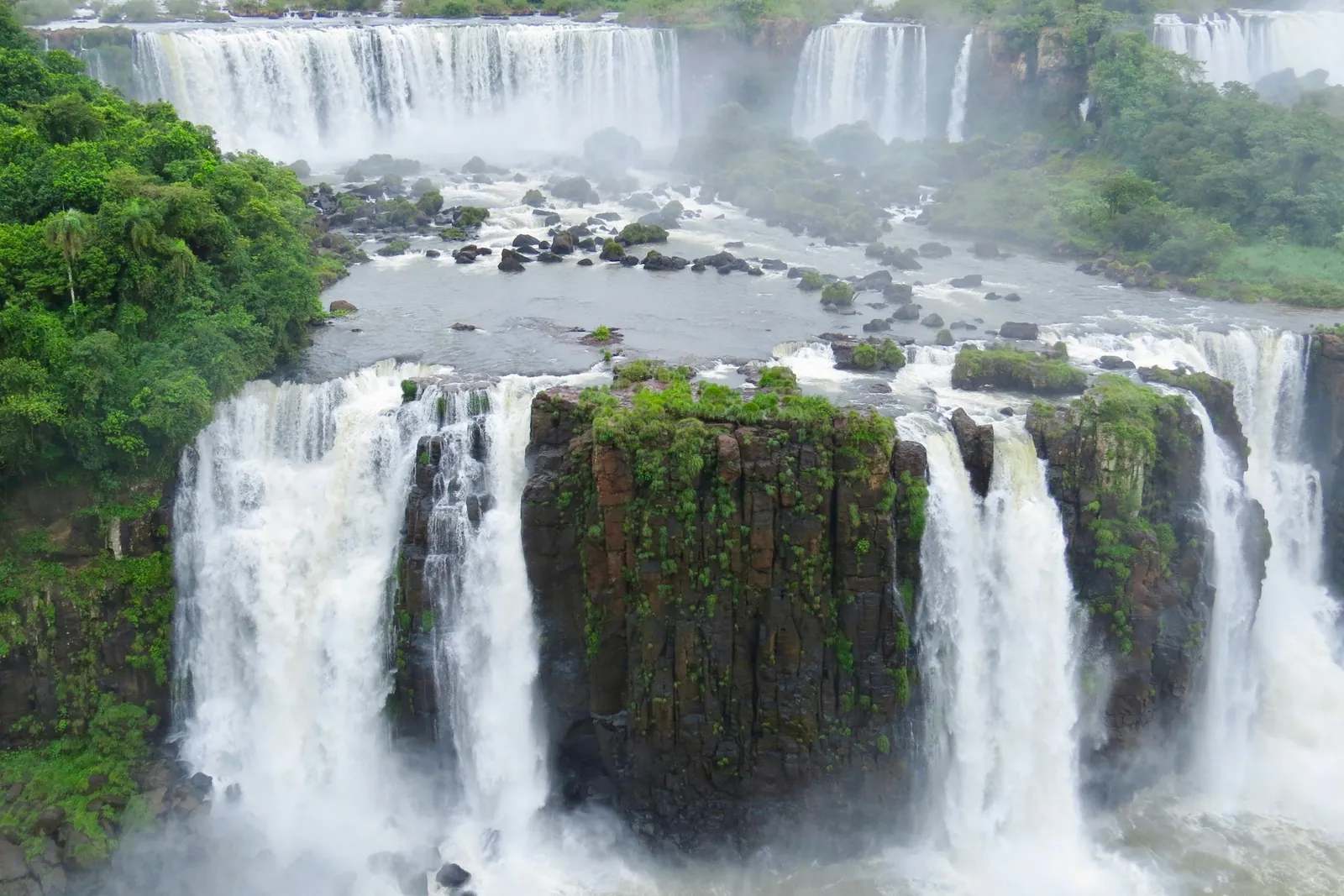
Two days later, a two-hour flight takes you north to the jungle. Iguazú is 29 °C and humid, the air is heavy, and the walkways lead through the forest to the edge of the Garganta del Diablo, where the river drops into a cloud of spray. In a minute you’re as wet as if it had rained. The people who took the boat ride under the falls come back soaked from head to toe, laughing, with their phones sealed in dry bags.
On the path back, a coati climbs onto the railing and eyes your backpack. The signs are clear: don’t feed them, and keep food zipped away.
Spring in Argentina means packing for two climates: a city of cool mornings, warm afternoons and late nights, and a subtropical waterfall where getting wet is part of the plan.
What to pack
Pack in layers for Buenos Aires, then add what keeps you and your things dry at the falls.
Clothes
- T-shirts and a couple of light long-sleeved shirts.
- A light jacket or sweater for mornings and evenings in Buenos Aires.
- Long trousers or a dress for dinners out; in the evening, Buenos Aires dresses smart-casual.
- Light, quick-dry clothes for Iguazú.
- Swimwear, if your hotel has a pool.
Shoes
- Comfortable walking shoes for the city; pavements can be uneven.
- Sandals or shoes that can get wet, for the walkways and the boat ride.
For the falls
- A rain poncho or light rain jacket (ponchos are also sold at the park).
- A dry bag or waterproof pouch for your phone and passport.
- A change of clothes if you take the boat ride.
- Insect repellent and sunscreen.
- A cap and sunglasses.
Documents, money and tech
- Passport. If you visit both sides of the falls, you cross into Brazil and back: citizens of Mercosur and associated countries, such as Chile, Peru or Colombia, can use their national ID card, and some passports, including US, Canadian and Australian ones, need a Brazilian e-visa even for a day trip.
- A plug adapter: Argentina uses type I sockets (angled flat pins) and some type C, at 220 V.
- A power bank for long days of maps and photos.
Good to know
- Weather: from September to November, Buenos Aires runs from about 10 to 25 °C (50 to 77 °F), with rain now and then; Iguazú is warmer and more humid, around 15 to 30 °C (59 to 86 °F), with frequent showers.
- Jacarandas: the city’s jacaranda trees bloom purple in November.
- The falls: the Argentine side has the most walkways, including the Garganta del Diablo; the Brazilian side has the panoramic view. Give the Argentine side a full day and the Brazilian side about half a day.
- Wildlife: the coatis at the falls bite and scratch when they go after food; don’t feed them.
- Plugs: types I and C, 220 V.
- Money: Argentine peso (ARS). Exchange rules, and the best way to pay, change often in Argentina; before you go, check whether cards, cash or payment apps get you the best rate.
- Entry: check the rules for your passport, for Argentina and, if you visit both sides of the falls, for Brazil.