· 3 min read
Patagonia: packing for four seasons in one day
Wind that pushes you off the path, sun, sleet and a glacier before lunch. What to pack for trekking in Torres del Paine and El Chaltén between November and March.
PNT · FTE
- When
- November–March
- Weather
- 2–18 °C, strong wind
- Pack
- Wind shell, layers, trekking poles
The story
Day three on the trail in Torres del Paine starts beautifully. The sun is up at 5:30, the lake below the refuge is turquoise, and at 8 a.m. you’re walking in a T-shirt. Your backpack is heavy with layers you haven’t used, and you wonder, for the first time, whether you overpacked.
At 10 you reach a ridge, and the wind hits you. Not a breeze: a wall of air that pushes you sideways and nearly takes your hat. Gusts in Patagonia regularly pass 80 km/h, and you learn to stop, plant your trekking poles and wait for it to pass. The fleece and the wind shell come out of the backpack.
At noon, the sky over the glacier turns gray and it starts to sleet, sideways, straight into your face. You pull on your rain trousers. The rain cover on your backpack flaps like a flag and then flips inside out, but everything inside is dry anyway, because you packed it in a waterproof liner.
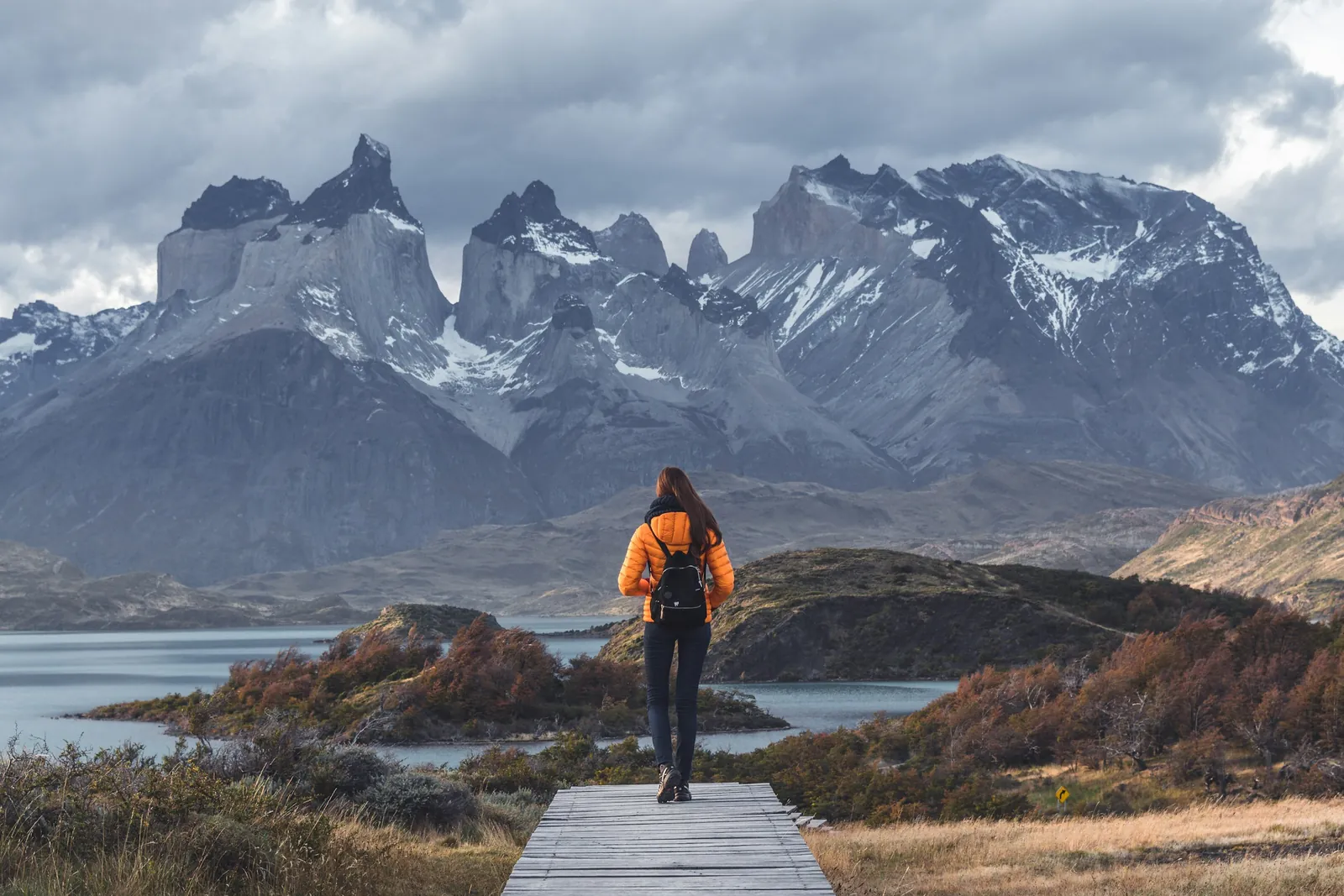
At two, the sun is back and you’re sweating again. At four, you reach the viewpoint. The granite towers stand above a glacial lake, clear against the sky, and the wind has dropped to almost nothing. You sit on a rock, eat, and take off one layer.
That evening in the refuge, someone describes the day as “four seasons before dinner”. Patagonia doesn’t punish you for bringing too many layers; it punishes you for leaving one behind.
What to pack
Pack layers you can add and remove in a minute, and keep everything dry inside the backpack.
Clothes
- A windproof and waterproof shell jacket with a good hood. This is the most important item.
- Waterproof trousers.
- Two merino base layers (top), and long johns for cold nights.
- A fleece and a thin down jacket.
- Hiking trousers; shorts are rarely worth it.
- A beanie, gloves and a neck gaiter, even in December and January.
- A sun hat with a chin strap, or the wind will take it.
Shoes
- Waterproof hiking boots, broken in long before the trip.
- Light shoes for the refuges and towns.
For the trail
- Trekking poles: they help on steep descents and in the wind.
- A waterproof backpack liner or dry bags. Rain covers blow away or flip in the wind.
- Sunscreen SPF 50, lip balm and good sunglasses: the sun is strong this far south.
- A refillable bottle; stream water is often drinkable, but ask the rangers.
- A headlamp, a basic first-aid kit and blister plasters.
Documents, money and tech
- Passport: the border between Chile and Argentina is part of many routes.
- Your park ticket and refuge or campsite bookings.
- Some cash in pesos for El Chaltén, where ATMs often run out.
- Two plug adapters (see below) and a power bank; charging in refuges is limited.
Good to know
- Weather: in the season (November to March), expect about 2 to 18 °C (36 to 64 °F), long days (up to 17 hours of light in December) and strong wind. The weather changes in minutes.
- Book ahead: in Torres del Paine, you need reservations for refuges and campsites before you start the W or O circuits, and park tickets are sold online. El Chaltén’s trails are free.
- Border: Chile doesn’t allow fresh fruit, vegetables, meat or dairy to cross the border. Declare any food you carry.
- Plugs: Chile uses types C and L, Argentina type I, both at 220 V: you need two different adapters.
- Money: Chilean peso (CLP) and Argentine peso (ARS). Cards work in most places.
- Entry: check the entry rules of both Chile and Argentina for your passport.