· 3 min read
Dubai in winter: what to pack for warm days, cold malls and the desert
25 °C on the beach, air conditioning turned up high indoors, and a desert evening that calls for a jacket. What to pack for Dubai between November and March, and what to wear where.
DXB
- When
- November–March
- Weather
- 14–31 °C, sunny
- Pack
- Light layers, a scarf, sunscreen
The story
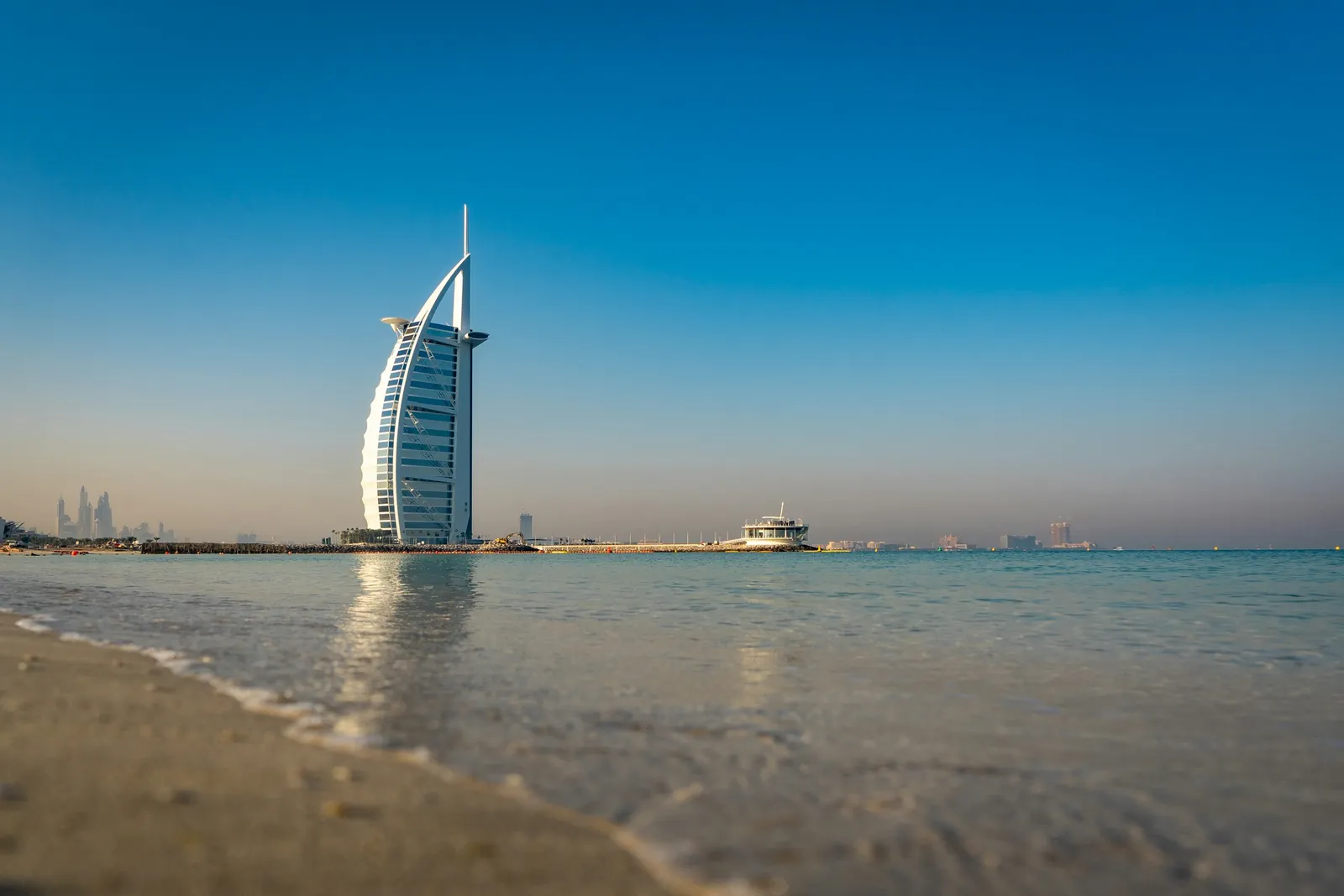
It’s January and the beach at Jumeirah is 25 °C, with a breeze off the Gulf and the water at a pleasant 22 °C. You spend the morning there with the Burj Al Arab on the horizon, and the sun is strong enough that you put on sunscreen twice.
In the afternoon you go into a mall to see the aquarium and find lunch, and within ten minutes you’re cold. The air conditioning never takes a day off, not even in winter, and the cardigan in your bag suddenly makes sense. The signs at the entrance ask visitors to keep their shoulders and knees covered; your linen trousers and a shirt over your T-shirt do the job.
At four, a four-by-four picks you up for the desert. The driver lets some air out of the tires, and the car climbs and slides over the red dunes. Fine sand gets everywhere: into your shoes, your pockets, your camera bag. At sunset the temperature drops fast, and by dinner at the camp, sitting on cushions under the stars, it’s 14 °C and you’re glad of the jacket you almost left at the hotel.
The next day you visit a mosque. You wear long trousers and long sleeves, and the scarf that kept the sand off your face now covers your hair.
Dubai in winter is easy: sunny, dry and warm. The trick is packing for three temperatures at once, the sun outside, the cold inside and the desert at night, and for a dress code that’s relaxed at the beach and more modest everywhere else.
What to pack
Pack summer clothes, then add a warm layer for indoors and the desert, and clothes that cover your shoulders and knees.
Clothes
- Light, breathable clothes for the day.
- Light long trousers, long skirts or dresses below the knee, and tops that cover the shoulders, for malls, souks and old Dubai.
- A cardigan or light sweater for the malls, the metro and cinemas, all heavily air-conditioned.
- A warmer jacket or fleece for the desert in the evening.
- Swimwear, for the beach and the hotel pool only.
- A scarf: for the sun, for sand in the desert, and to cover your hair at a mosque.
Shoes
- Comfortable walking shoes.
- Sandals for the beach.
- Closed shoes for the desert: the sand gets hot by day and gets into everything.
For the sun and the desert
- Sunscreen, sunglasses and a hat: the sun is strong even in winter.
- Lip balm and moisturizer: the air conditioning and the desert dry your skin.
- A zip-top bag for your phone and camera in the desert.
Documents, money and tech
- Passport.
- A plug adapter: sockets are type G (three rectangular pins, as in the UK), at 230 V.
- A power bank.
Good to know
- Weather: from November to March, days are around 24 to 31 °C (75 to 88 °F), warmest in November and March, and nights 14 to 21 °C (57 to 70 °F); the desert gets colder after sunset. Rain is rare.
- What to wear where: swimwear is for beaches and pools. In malls, souks and old Dubai, cover your shoulders and knees; to visit a mosque, wear long sleeves and long trousers or a long skirt, and women cover their hair.
- Medicines: some common medicines, such as those with codeine, are controlled in the United Arab Emirates and need approval from the country’s health ministry before you travel; apply online, and carry the prescription.
- Plugs: type G, 230 V.
- Money: UAE dirham (AED), pegged to the US dollar. Cards are accepted almost everywhere.
- Entry: many nationalities can enter the UAE without a visa or get one on arrival; check the rules for your passport.