· 3 min read
The Canadian Rockies in summer: what to pack for turquoise lakes, cold mornings and bear country
24 °C at noon on the trail, 6 °C at dawn, glacier-fed lakes too cold to swim in and afternoon storms over the peaks. What to pack for Banff and Jasper in July and August.
YYC
- When
- July–August
- Weather
- 5–25 °C, changeable
- Pack
- Layers, a rain jacket, bear spray
The story
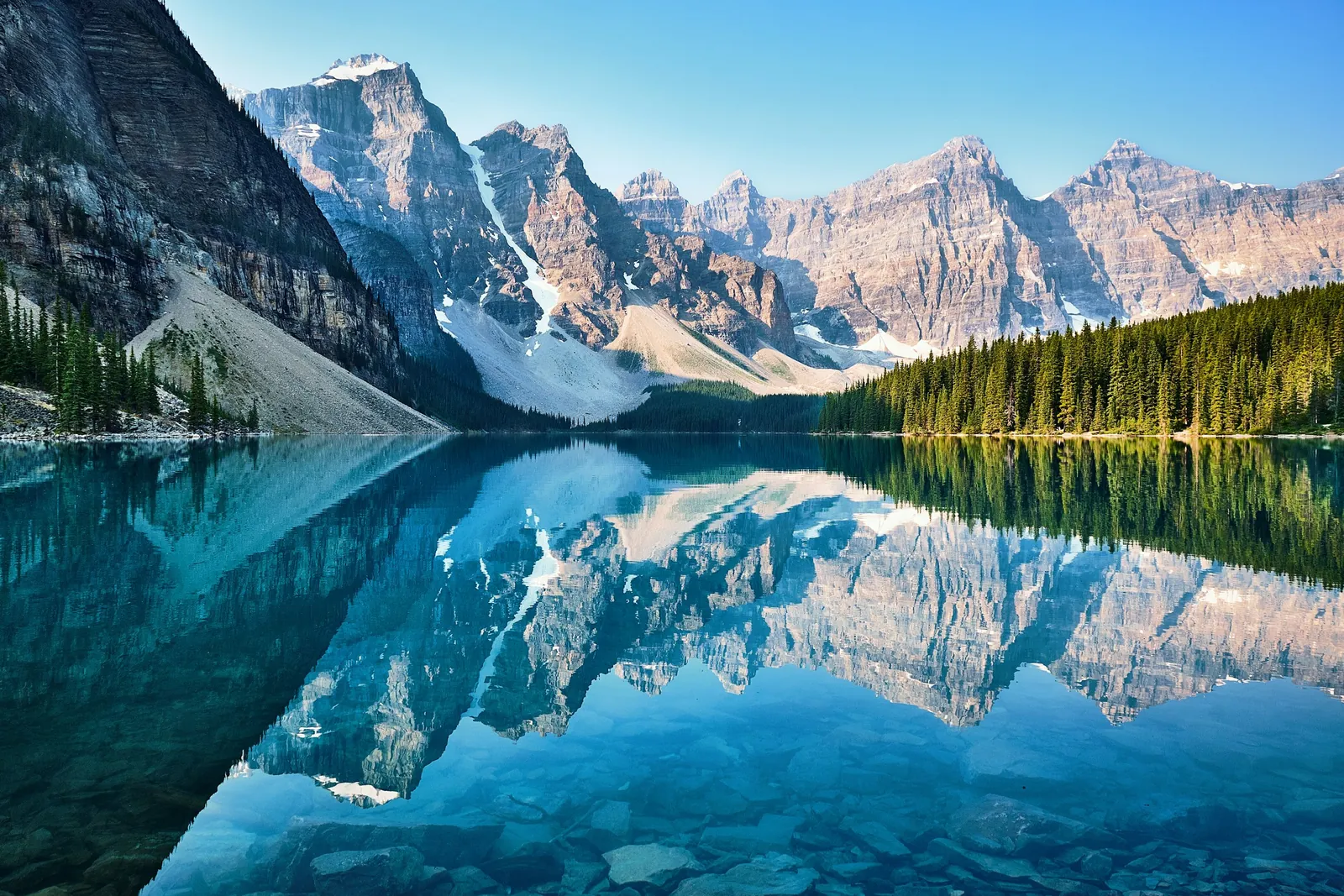
You leave Banff at six in the morning to beat the crowds, and it’s 6 °C. By the time the shuttle drops you at Moraine Lake, the sun is on the peaks and the water is an unreal turquoise, colored by the fine rock dust the glaciers grind into it. You’re wearing a fleece and a hat, and you keep them on for the first hour of the hike.
At the trailhead, a sign lists recent bear sightings. The couple next to you asks where to buy bear spray: you can’t bring it on a plane, so you picked up a canister in Banff the day before, and it rides on your hip belt where you can reach it. You hike as a group, talking loudly around blind corners, and the only animal you meet is a marmot whistling from a rock.
By noon it’s 24 °C and you’re in a T-shirt, eating lunch by a lake so clear you can see every stone on the bottom. You dip a hand in: the water is barely above freezing. At two, dark clouds build over the ridge, thunder rolls down the valley and a cold rain starts. Your rain jacket comes out of the backpack, and the fleece goes back on.
Later that week you drive the Icefields Parkway to Jasper and stop at the Athabasca Glacier. It’s windy and cold at the edge of the ice, even in August, and the signs warn you not to walk onto the glacier without a guide: hidden crevasses have killed people here.
The Canadian Rockies in summer can give you three seasons in one day. Pack layers, a real rain jacket and good boots, and treat the mountains, and the bears, with respect.
What to pack
Pack in layers for cold mornings and warm afternoons, with rain gear for the storms.
Clothes
- A waterproof, breathable rain jacket.
- A fleece or light down jacket for early mornings and evenings.
- Hiking trousers and shorts, and T-shirts in wool or synthetic fabric.
- A warm hat and light gloves for high trails and the Icefields Parkway.
- A sun hat, and swimwear for the hot springs; the lakes are too cold for most people.
Shoes
- Broken-in hiking boots with good grip.
- Comfortable shoes or sandals for the towns and the evenings.
For the trails
- Bear spray, bought or rented when you arrive, carried where you can reach it.
- A daypack, a refillable water bottle and snacks.
- Insect repellent for evenings by the lakes.
- Sunglasses and sunscreen: the sun is strong at altitude.
- A map or an offline map app: many trails have no phone signal.
Documents, money and tech
- Passport, and your eTA or visa.
- Your driver’s license, if you’re renting a car.
- A plug adapter if you come from outside North America: sockets are types A and B, at 120 V.
- A power bank.
Good to know
- Weather: in July and August, Banff and Jasper reach about 20 to 25 °C (68 to 77 °F) by day and drop to 5 to 10 °C (41 to 50 °F) at night. Afternoon thunderstorms are common, and it can snow on high passes even in summer.
- Parks: you need a Parks Canada pass to stop in Banff and Jasper. Moraine Lake is closed to private cars; get there by shuttle or bus, and book ahead.
- Wildlife: hike in groups, make noise, carry bear spray and never feed animals. Airlines don’t allow bear spray, so buy or rent it in Banff, Canmore or Calgary.
- Wildfires: in late summer, smoke can haze the valleys and trails can close; check Parks Canada before you go. In Jasper, a 2024 wildfire destroyed part of the town: check what’s open.
- Plugs: types A and B, 120 V.
- Money: Canadian dollar (CAD). Prices usually don’t include sales tax, and tips of 15 to 20% are expected in restaurants.
- Entry: US citizens need neither an eTA nor a visa. Most other visa-exempt travelers flying to Canada need an eTA, and some nationalities that usually need a visa, Brazil and Mexico among them, can get an eTA instead if they hold a valid US visa or had a Canadian visa in the past ten years. Check which applies to your passport.