· 3 min read
Iceland's Ring Road in summer: what to pack for rain, wind, waterfalls and the midnight sun
12 °C in July, four seasons in an afternoon, waterfalls you walk behind, hot pools and a sun that barely sets. What to pack for a road trip around Iceland between June and August.
KEF
- When
- June–August
- Weather
- 8–15 °C, wind and rain
- Pack
- Rain shell, layers, a swimsuit
The story
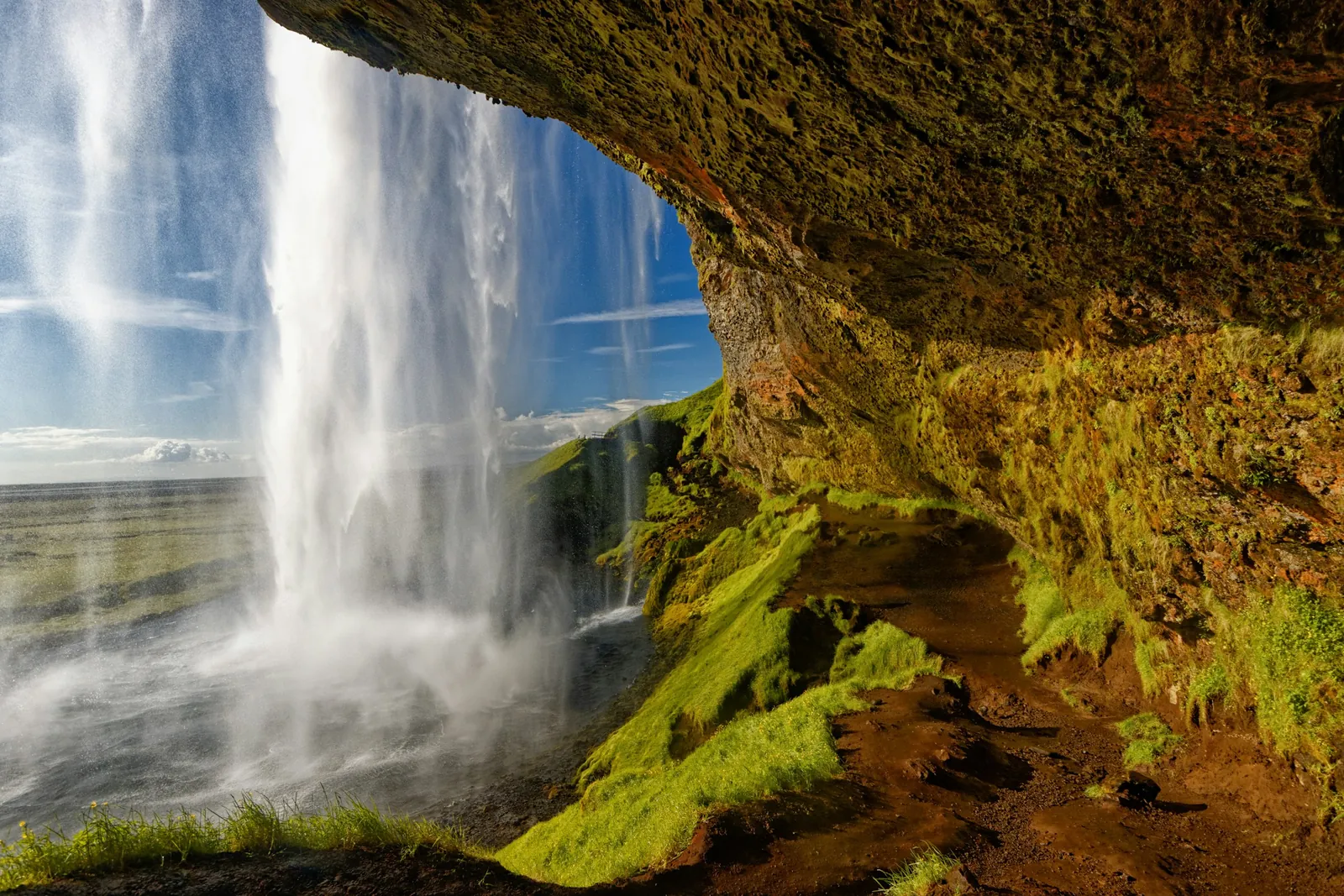
It’s July, and at the Seljalandsfoss waterfall the path runs right behind the falling water. It’s 12 °C, the wind throws the spray sideways, and everyone who walks behind the fall comes out dripping. Your waterproof jacket and trousers keep you dry; the family ahead of you in cotton hoodies is soaked through and heading back to the car.
Half an hour later the sky clears, and the sun on the green cliffs is so bright you need sunglasses. By the time you reach the black sand beach at Reynisfjara, a gray squall has blown in from the sea. The signs warn about sneaker waves that run far up the beach without warning, and you keep well back from the water.
The Ring Road goes on around the island: a glacier lagoon full of floating icebergs, the fjords of the east, and, near Lake Mývatn, clouds of midges that hover around your head on still days. You’re glad of the head net someone recommended.
Every day ends at a hot pool. The rule is strict and posted on the wall: shower without your swimsuit before you get in. Then you sit in 38 °C water while the air is 10 °C, and it’s eleven at night and still light.
When you go to bed at midnight, the sun has barely set; in the north it hardly sets at all. The eye mask you packed turns out to be the most useful thing in your bag.
Iceland in summer is mild, bright and changeable. You’ll see sun, rain and wind on the same day, sometimes in the same hour. Waterproof layers, warm clothes and a swimsuit cover it all.
What to pack
Pack as you would for a cool, wet spring, then add a swimsuit and an eye mask.
Clothes
- A waterproof, windproof jacket with a hood, and waterproof trousers.
- A warm fleece or a light down jacket.
- A thin wool or synthetic base layer; cotton stays wet and cold.
- Hiking trousers, a warm hat and light gloves.
- Swimwear and a quick-dry towel, for pools, lagoons and hot springs.
Shoes
- Waterproof hiking boots with good grip, for wet paths and gravel.
- Sandals or light shoes for the pools and the evenings.
For the road
- An eye mask for the midnight sun.
- A head net for the midges around Lake Mývatn.
- A refillable water bottle: the tap water is excellent.
- Snacks: distances are long and food is expensive.
- Sunglasses and sunscreen.
Documents, money and tech
- Passport, and your driver’s license if you’re renting a car.
- A card with a PIN: many fuel pumps are self-service.
- A plug adapter if you come from outside continental Europe: sockets are types C and F, at 230 V.
- A power bank and a car charger.
Good to know
- Weather: from June to August, it’s usually 8 to 15 °C (46 to 59 °F), with wind and showers on any day; it rarely gets warmer than 20 °C (68 °F).
- Light: around the June solstice, the sun sets near midnight in Reykjavík and barely at all in the north; it stays light all night.
- Safety: on beaches like Reynisfjara, sneaker waves have dragged people into the sea; stay well back and never turn your back on the water. Check the official road and weather websites before each day’s drive. Mountain roads, the F-roads, need a 4×4 and usually only open from late June or July.
- Pools: showering without a swimsuit before you get in is required at every public pool.
- Plugs: types C and F, 230 V.
- Money: Icelandic króna (ISK). Cards are accepted almost everywhere, even for small amounts; you’ll rarely need cash.
- Entry: Iceland is in the Schengen area, though not in the EU. If you’re not a citizen of an EU or Schengen country, check whether you need a visa or a travel authorization before you go, and expect a biometric border check on your first entry.