· 3 min read
Chasing the northern lights in Tromsø and Lapland: how to pack for −20 °C
Long nights, dry cold and hours of standing still under the sky. A story from an aurora night, and the layers, boots and batteries that make it comfortable.
TOS · RVN
- When
- February–March
- Weather
- −25 to −2 °C
- Pack
- Wool, down, warm boots
The story
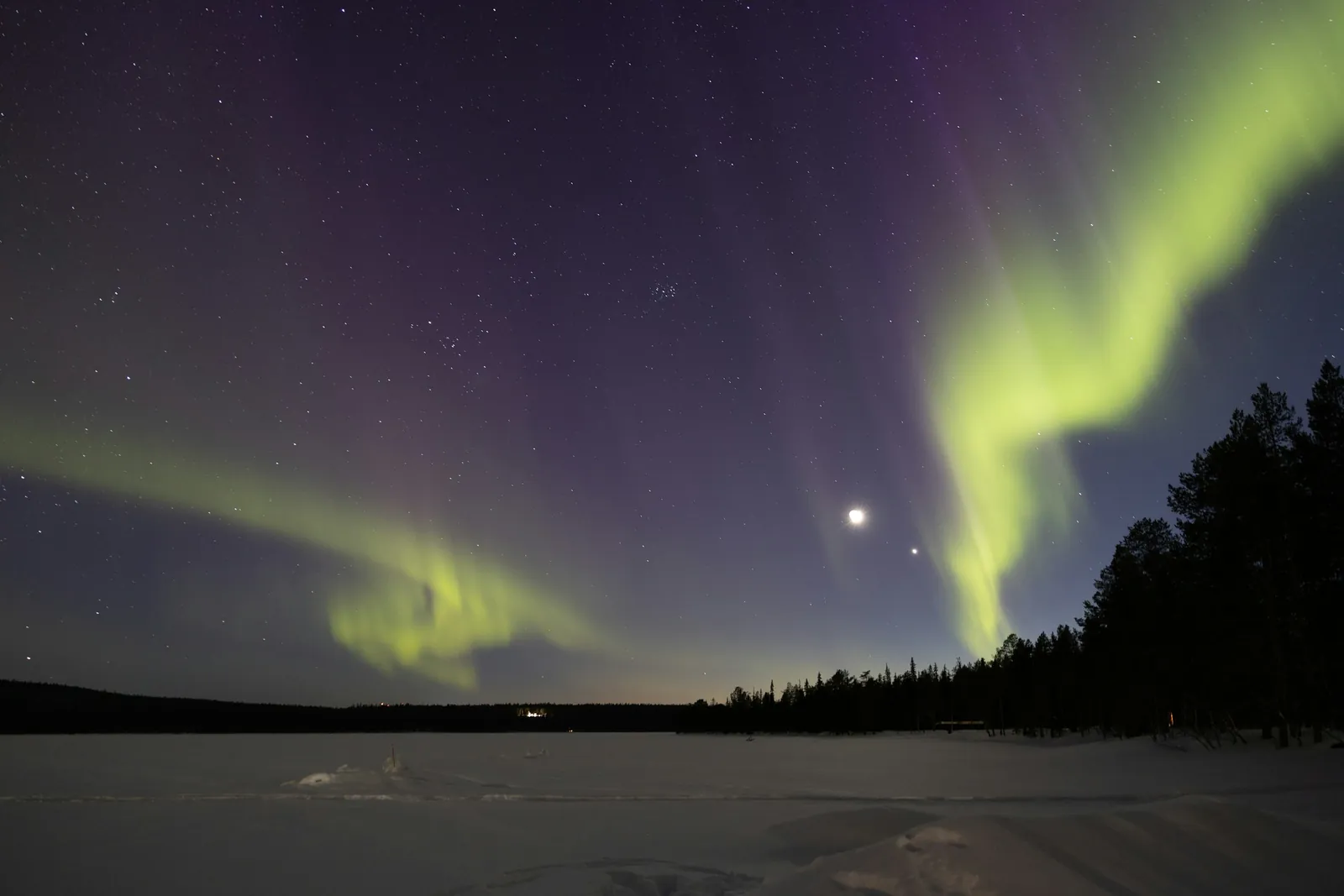
The minibus stops by a frozen lake an hour from town, far from any street light. The guide switches off the engine, and the silence is enormous. It’s 11 p.m. and −22 °C. Everyone gets out, looks up, and sees nothing but stars.
Waiting is most of an aurora night. You stand, you walk in small circles, you drink the hot blackcurrant juice the guide pours from a thermos. And the cold starts where it always starts: in your feet. Then your fingertips, because you took off your mittens to set up the camera.
At half past midnight, a pale gray arc appears over the hills. For a minute you think it’s a cloud. Then it turns green, and then it moves: it folds, ripples, and a curtain of light drops down the sky so fast that the whole group goes quiet. You pick up your phone to film it, and the screen goes black. The battery showed 60% ten minutes ago. The cold killed it.
Luckily you have a spare battery in the inner pocket of your jacket, warm against your body. You swap it in with liner gloves on, and you get the shot.
On the way back, half asleep and happy, you think about what worked. The thermal suit the tour lent you over your own layers. Wool socks. Boots rated for −30 °C. Mittens instead of gloves. And batteries kept close to your body. The aurora doesn’t care how cold you are; your packing decides how long you can wait for it.
What to pack
You’ll be outside for hours without moving much. Pack for stillness, not for hiking.
Clothes
- Two merino base layers (top and long johns). Wool stays warm even when damp.
- A fleece or wool mid layer.
- A warm down jacket, and a windproof layer over it (or a parka that does both).
- Insulated snow trousers.
- Wool socks: a thin liner pair plus a thick pair, and boots with room for both.
- A warm hat that covers your ears, a balaclava or neck gaiter, and mittens with thin liner gloves inside.
Shoes
- Insulated winter boots rated for at least −30 °C. Your feet are where the night ends.
- Ice cleats or slip-on spikes for icy streets, especially in Tromsø.
For the night
- A headlamp with a red-light mode, so you don’t blind everyone else.
- A tripod, if you want sharp photos. Phones with night mode do well on one.
- Spare batteries and a power bank, kept in an inner pocket.
- Hand and foot warmers.
- A thermos, if your tour doesn’t bring hot drinks.
For the dry cold
- Lip balm and a rich moisturizer.
- Sunglasses for daytime: low sun on snow is bright.
Documents, money and tech
- Passport or ID card.
- A card: Norway is almost cashless, and Finland nearly so.
- Your tour booking. Many tours lend thermal suits and boots; check before you buy.
Good to know
- Weather: Tromsø sits on the coast and is milder (about −6 to −1 °C, or 21 to 30 °F, in February); inland Lapland, around Rovaniemi, often reaches −15 to −25 °C (5 to −13 °F), and colder on clear nights. Clear nights, the ones you want, are always the coldest.
- When: the aurora season runs from September to March. February and March bring longer days for sledding and snowmobiles, and dark nights for the lights.
- Plugs: types C and F, 230 V, in both Norway and Finland.
- Money: Norwegian krone (NOK) in Norway, euro in Finland.
- Entry: both countries are in the Schengen area. Non-EU visitors should check visa and travel authorization rules.