· 3 min read
Vienna and Prague in winter: what to pack for cold city days
Freezing mornings, warm cafés, icy cobblestones and a night at the opera. A winter city break told as a story, and the list that keeps you warm without overpacking.
VIE · PRG
- When
- January
- Weather
- −4 to 3 °C, snow possible
- Pack
- Warm layers, boots with grip
The story
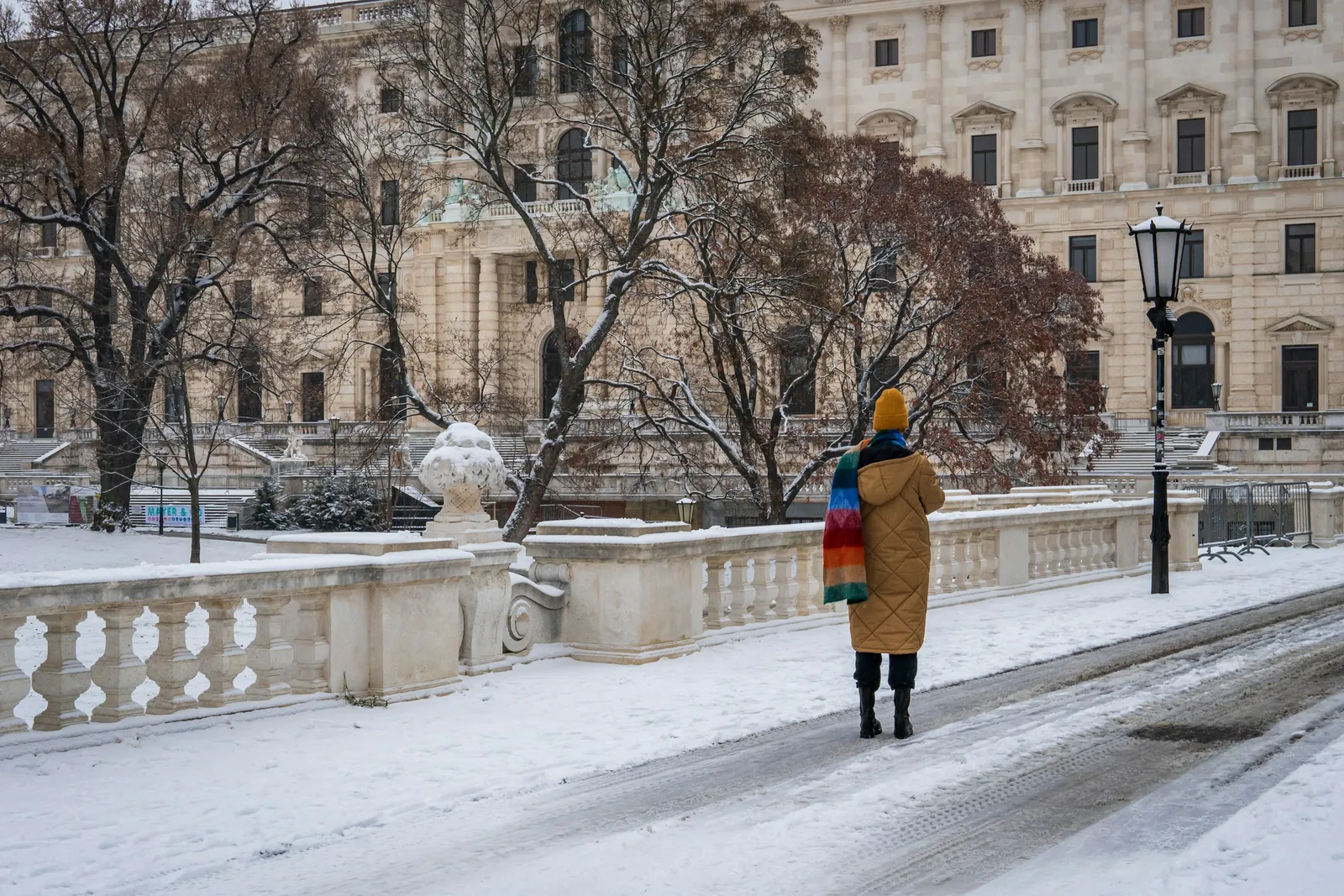
Your train pulls into Vienna at eight in the morning and the platform display reads −3 °C. The air is dry and sharp, the kind that makes your nose tingle, and the first thing you learn is that a good coat is only half the answer. The other half is what’s under it.
By ten you’re in a coffee house with high ceilings and marble tables, and the heating is on full. The waiter brings a melange and a glass of water, and within five minutes you’re peeling off your scarf, your hat, your gloves and the sweater under your coat. This is the rhythm of a winter city break in Central Europe: freezing streets, overheated rooms, and you in between, putting layers on and taking them off a dozen times a day.
The sun sets before half past four. You walk the Ringstrasse in the blue light, then queue for standing tickets at the opera. Nobody checks your clothes, but everyone around you has made an effort, and you’re glad you packed one pair of trousers that isn’t jeans and a sweater that looks good on its own.
Two days later, the train takes you to Prague in about four hours. The cobblestones on the way up to the castle are glazed with ice in the morning, and you watch a man in city shoes take very small steps, arms out, like he’s on a frozen pond. Your boots have deep treads. You don’t slip once.
What made the trip comfortable wasn’t a heavier coat. It was thin layers you could take off indoors, boots that grip, and a few small things (lip balm, hand cream, a power bank) that the cold makes necessary.
What to pack
For five days in two cities, one carry-on is enough if you pack layers instead of bulk.
Clothes
- A warm coat that covers your hips: insulated or wool, windproof if possible.
- Two thermal base layers (top and leggings). Merino can be worn several days without smelling.
- Two or three sweaters or fleeces that look fine on their own, for heated museums and cafés.
- Two pairs of trousers: one warm and practical, one a little smarter for the opera or a nice dinner.
- Wool socks, one pair per day, or fewer if you’ll wash them.
- A hat that covers your ears, a scarf and gloves that work with a touchscreen.
Shoes
- Waterproof boots with deep treads, broken in before the trip. Icy cobblestones are the most common winter accident in old towns.
- One lighter pair for evenings, if you’re dressing up.
For the weather
- A small umbrella for sleet.
- Lip balm and hand cream: heated indoor air is very dry.
- Tissues. Everyone’s nose runs at −4 °C.
Documents, money and tech
- Passport or ID card, and your rail tickets.
- Cards, plus a little cash in euros (Vienna) and Czech korunas (Prague) for small stalls.
- Phone charger and a power bank: cold drains batteries faster.
- A plug adapter if you come from outside continental Europe.
Good to know
- Weather: typical January days run from about −4 to 3 °C (25 to 37 °F), colder in Prague than in Vienna. Snow is possible; slush is likely.
- Plugs: types C and F in Austria, C and E in Czechia, 230 V. A Europlug (type C) adapter works in both.
- Money: Austria uses the euro and Czechia the koruna (CZK). When a card machine offers to charge you in your home currency, choose the local one: the rate is almost always better.
- Entry: both countries are in the Schengen area. If you’re not an EU citizen, check whether you need a visa or a travel authorization before you go, and expect the EU’s biometric border check on your first entry.
- Light: in January it gets dark around 4:30 p.m. Plan outdoor sights for the morning and keep museums and concerts for the evening.