· 3 min read
A ski week in the Alps: the packing list, layer by layer
Cold chairlifts, bright sun, après-ski and a spa at the end of the day. What to pack for a week on the slopes in Austria, Switzerland or France, and what to rent there.
GVA · INN
- When
- February
- Weather
- −12 to 2 °C on the slopes
- Pack
- Three layers, goggles, SPF 50
The story
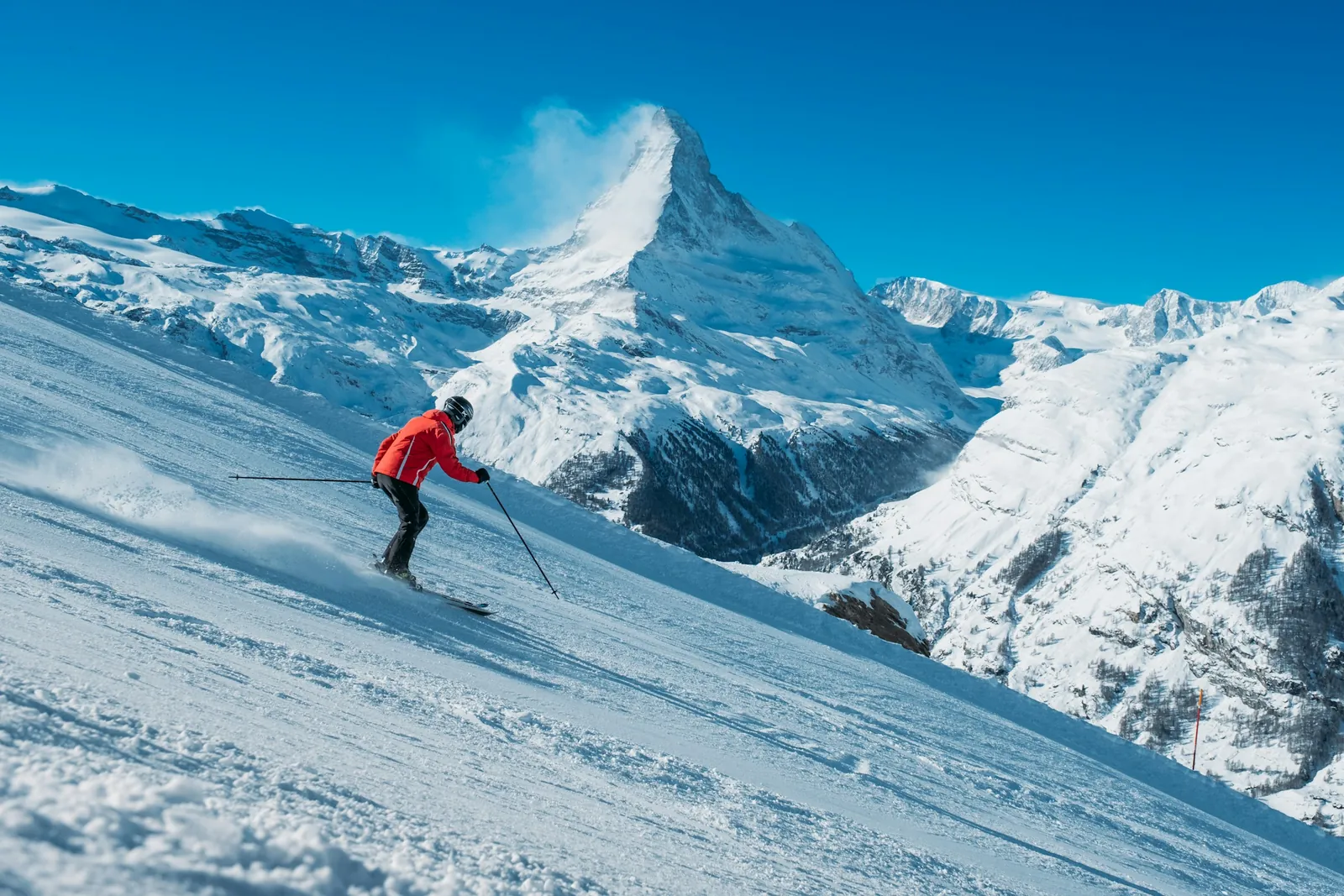
The first chairlift of the day leaves at half past eight, and the air at the top station bites: −11 °C, and a wind that finds the gap between your gloves and your sleeves. You pull your neck gaiter up over your nose and push off.
By eleven, everything has changed. The sky is clear, the snow reflects the sun back at you, and you’re too warm. You open the vents of your jacket and stop at a hut for lunch, where you notice two things: the people at the next table have red, peeling noses, and you forgot to put sunscreen on your ears. At 2,000 metres, with snow all around, the sun burns faster than at the beach.
In the afternoon, the light goes flat and gray. Bumps in the snow become invisible, and you’re grateful for the goggles with the yellow lens you almost left at home. The last run down to the village is long, your legs are shaking, and your boots feel like concrete.
Then the best part of the day: après-ski. You swap the ski boots for warm snow boots with grip, because the village paths are icy, and later you go to the hotel spa. The pool needs a swimsuit; the sauna, as in much of the Alps, does not.
Skiing is the one holiday where the right layers matter more than the right outfit. Three thin layers, protection from the sun, and dry socks every day make the difference between a great week and a miserable one.
What to pack
Rent the heavy things (skis, poles, boots, helmet) and pack for layering.
On the slopes
- Two base layers, top and bottom, in merino or synthetic fabric. No cotton: it holds sweat and gets cold.
- A mid layer: a fleece or a thin down jacket.
- A waterproof, breathable ski jacket and ski trousers. Rent them if you ski once a year.
- Ski socks: one thin pair per day, or three pairs you wash. One pair only, never two on top of each other.
- Gloves or mittens, plus thin liner gloves for very cold days.
- A neck gaiter and a thin beanie that fits under the helmet.
- Goggles (a lens for flat light, too) and sunglasses.
For the sun and the cold
- Sunscreen SPF 50 and a lip balm with SPF. Remember your ears and the tip of your nose.
- Hand warmers for the coldest days.
- A small backpack or a jacket with inside pockets, for your ski pass, phone and a snack.
Après-ski and the spa
- Snow boots with grip for the village.
- Comfortable trousers, a sweater and a warm hat for the evenings.
- A swimsuit and flip-flops for the pool and spa.
Documents, money and tech
- Travel insurance that covers winter sports, including mountain rescue. Many standard policies don’t.
- Ski pass (many resorts sell it online, cheaper in advance).
- A power bank: phones die fast in the cold.
- If you’re driving: the motorway vignette for Austria or Switzerland, and winter tyres or snow chains.
Good to know
- Weather: in February, expect about −12 to 2 °C (10 to 36 °F) on the slopes, colder with wind, and strong sun on clear days.
- Plugs: type J in Switzerland, C and F in Austria, C and E in France, 230 V. A Europlug (type C) adapter fits all three.
- Money: Swiss franc (CHF) in Switzerland, euro in Austria and France. Cards work almost everywhere, including mountain huts.
- Renting: book skis and boots before you arrive in high season. If you own ski boots that fit you well, bring them: they matter more than the skis.
- Entry: all three countries are in the Schengen area. Non-EU visitors should check their visa or travel authorization requirements.