· 7 min read
What to pack for a road trip with a baby, stop by stop
Five hours to grandma's, a stop every two hours, sun on the side window, a spit-up on the curves. What to pack for a road trip with a baby.
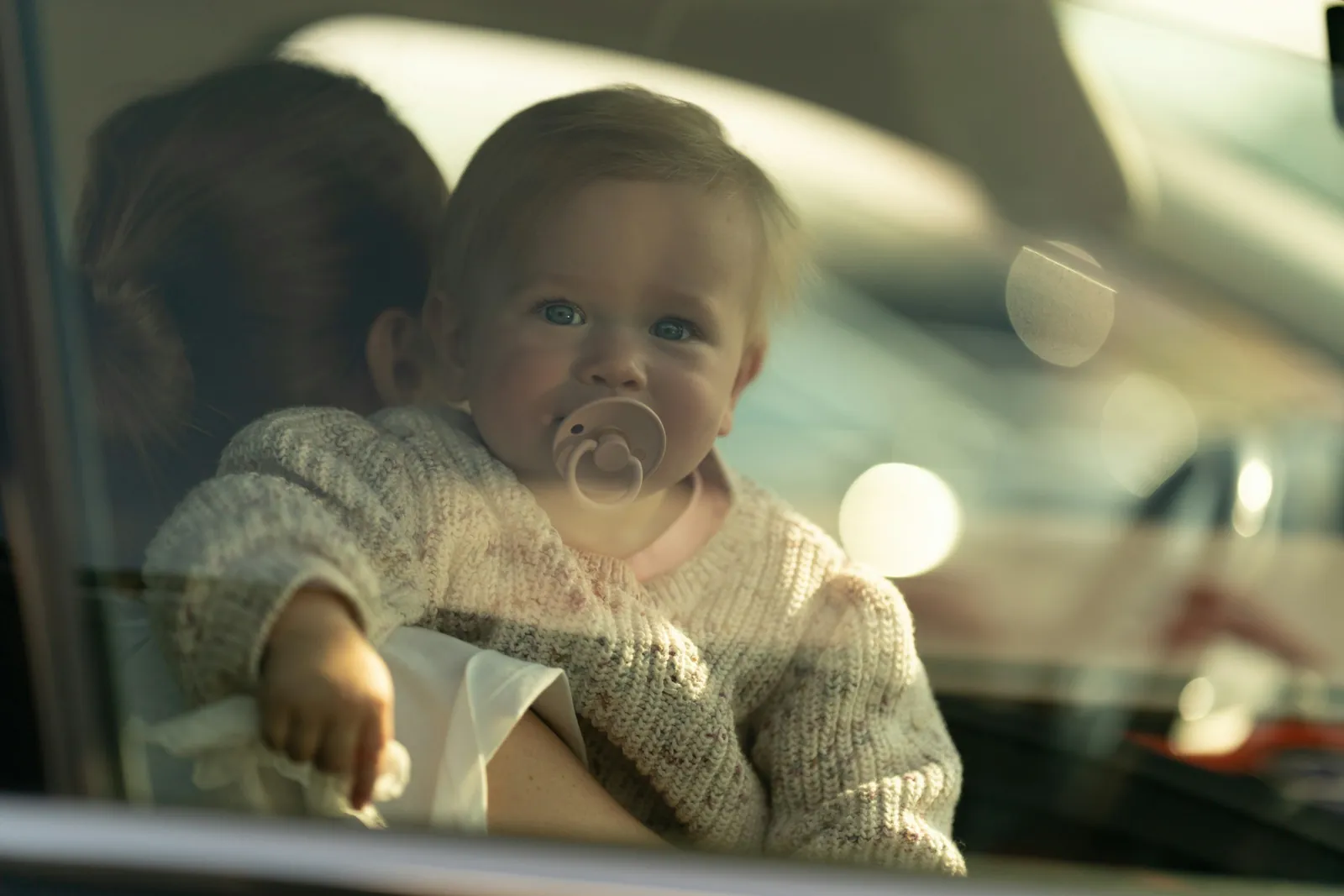
BABY · CAR
A road trip with a baby
- When
- Any time of year
- Pack
- Car seat, sun shades, milk, a travel cot
For a road trip with a baby, the car seat comes first: rear-facing, in the back, fitted before the trip. Then a bag within reach: diapers, wipes, two changes of clothes, milk and food for the drive and a few hours more, sun shades, a spit-up kit, and a travel cot. Stop every two hours.
The story
It’s a holiday drive of five hours to your parents’ house, and your daughter is seven months old. The night before, you fit her car seat in the back, rear-facing, and pull the harness tight against the straps. In the morning she goes in after her feed, in a bodysuit and a thin cardigan; the puffy jacket rides in the trunk, and a blanket goes over the harness.
You leave at nap time, and she’s asleep before the highway. The sun comes in low through the side window, straight onto her face, and the shade you clipped to the glass the night before takes care of it. A mirror on the back headrest lets you see her from the front seat without turning round.
After two hours you stop at a service area. She comes out of the seat, onto the changing pad on the back seat, then onto your lap for a bottle, with the doors open and the engine off. Twenty minutes of crawling on a blanket in the shade, and she’s ready to go back in.
On the winding road down to the coast comes the spit-up, all over her bodysuit and the seat cover. It’s all in one pouch: wipes, a muslin cloth, a bag for the dirty clothes, a clean bodysuit. The second stop is a small town: a diaper, puree from a pouch, a pacifier, and her favorite toy for the last stretch.
At your parents’ house, the travel cot goes up in the spare room, with the sheet that fits it and the sleep sack she wears at home. She sleeps in a new room as if it were her own.
A road trip with a baby comes down to the car seat and the bag beside it: milk, food, and diapers for the whole drive and a few hours more, a change of clothes for both of you, shade for the window, and somewhere to sleep at the other end. Pack the bag first, and keep it within reach.
What to pack for a road trip with a baby
The car seat goes in first, then one bag within reach of the back seat, and the rest in the trunk.
The car seat and the car
- The car seat, fitted before the trip: rear-facing, in the back seat, and the right one for the baby’s size (see Good to know).
- Sun shades for the side windows: the sun moves across the back seat as the road turns.
- A mirror for the back headrest: you see the baby from the front without turning round.
- A thin blanket to go over the harness: warmth without a bulky coat under the straps.
- A cooler bag with ice packs: for milk, purees, and water on a long day.
- Phone holder and a car charger: the map, and the number of a pediatrician where you’re going.
The diaper bag, within reach
- Diapers: about one for every two hours of the drive, plus a few for traffic.
- Wipes, a changing pad, and bags for dirty diapers: service-area changing tables aren’t everywhere, and the back seat works.
- Two changes of clothes for the baby, and a spare top for you.
- Diaper cream and hand sanitizer.
- Any medicine your pediatrician suggests, and a thermometer.
Feeding
- Milk, formula, and baby food for the drive and a few hours more: traffic and closed shops happen.
- Formula powder in a dispenser, a flask of boiled water, and two or three bottles.
- Pouches of puree and a spoon, if the baby eats solids: nothing to heat.
- Water and snacks for you: the stops go to the baby.
- Feed at the stops, with the car parked and the baby out of the seat: a bottle goes down better on a lap.
The spit-up and car-sickness kit
- A muslin cloth or two, and wipes: for the spit-up after a winding road.
- A clean bodysuit and a spare seat-cover towel: the seat stays dry for the next hours.
- Sealable bags for dirty clothes, and a few sick bags for older passengers.
Sleep, on the road and where you stay
- A travel cot or a portable crib, with its own fitted sheet: a firm, flat place to sleep (ask the hotel or the house whether it has one).
- The sleep sack the baby already sleeps in: familiar in a new room.
- A pacifier, a spare, and a favorite toy for the last hour of the drive.
- A small night light and a white-noise app: a strange room is darker and louder than home.
Clothes
- Bodysuits and thin layers: the car warms up and cools down, and a bulky coat can’t go under the harness.
- A jacket or snowsuit for the stops, off in the car.
- A sun hat for the stops, and sunscreen your pediatrician approves.
Documents
- The baby’s ID, and the baby’s own passport if the drive crosses a border.
- Your driver’s license, the car’s documents, and the rental agreement if it’s a rental.
- Travel insurance or health insurance that covers the baby, and the pediatrician’s number.
Good to know
- The car seat: in the US, the CDC advises a rear-facing seat from birth until the seat’s height or weight limit, about age 2 to 4, and children in the back seat until 13; a rear-facing seat never goes in front of an active airbag. In the UK, GOV.UK says children need a child seat until 12 or 135 cm (4 ft 5 in), height-based seats face backwards until the child is over 15 months, and seats carry an R129 or ECE R44 label (checked October 19, 2026). The rules differ by country: check where you’ll drive.
- Stops: there’s no law on how long a baby may ride, but NHS advice in the UK is to stop and take regular breaks on long drives, take the baby out of the seat at your destination, and put them to sleep on a firm, flat surface (NHS Wales); many NHS hospital leaflets say no more than two hours at a time in the seat. With a newborn or a premature baby, ask your pediatrician first (checked October 19, 2026).
- Coats and the harness: bulky coats and snowsuits shouldn’t go under the harness: in a crash the padding flattens and leaves the straps loose. Put a blanket or the coat over the buckled harness instead (American Academy of Pediatrics).
- Heat: never leave the baby alone in the car, even for a minute: a parked car heats up fast, in the sun or not.
- Renting the car: if you rent, you can usually book a car seat with the car; ask its type and the baby’s size it fits, or bring your own.
- Flying first? For the airport and the plane, see what to pack when flying with a baby; for a summer drive through the national parks, the Southwest road trip packing list.
Questions
How long can a baby be in a car seat?
There’s no law on it, but NHS advice in the UK is often no more than two hours at a time, with regular breaks out of the seat. Take the baby out when you arrive, and ask your pediatrician first with a newborn or a premature baby.
How often should you stop on a road trip with a baby?
About every two hours: take the baby out of the seat, feed and change her, and let her move. Plan the drive around naps, and allow extra time for the stops.
Can a baby ride in the front seat?
Not in front of an active airbag: a rear-facing seat must never go there. The CDC advises children in the back seat until 13; in the UK, a rear-facing seat may go in front only with the airbag turned off.
Should a baby wear a coat in a car seat?
No: a bulky coat or snowsuit leaves the harness loose in a crash. Dress the baby in thin layers, buckle the harness, then put a blanket or the coat over it.
Where does a baby sleep on a road trip?
On a firm, flat surface: a travel cot or portable crib, with its own fitted sheet. Babies may nap in the car seat while you drive, but come out of it when you arrive.